Biopsy: Definition
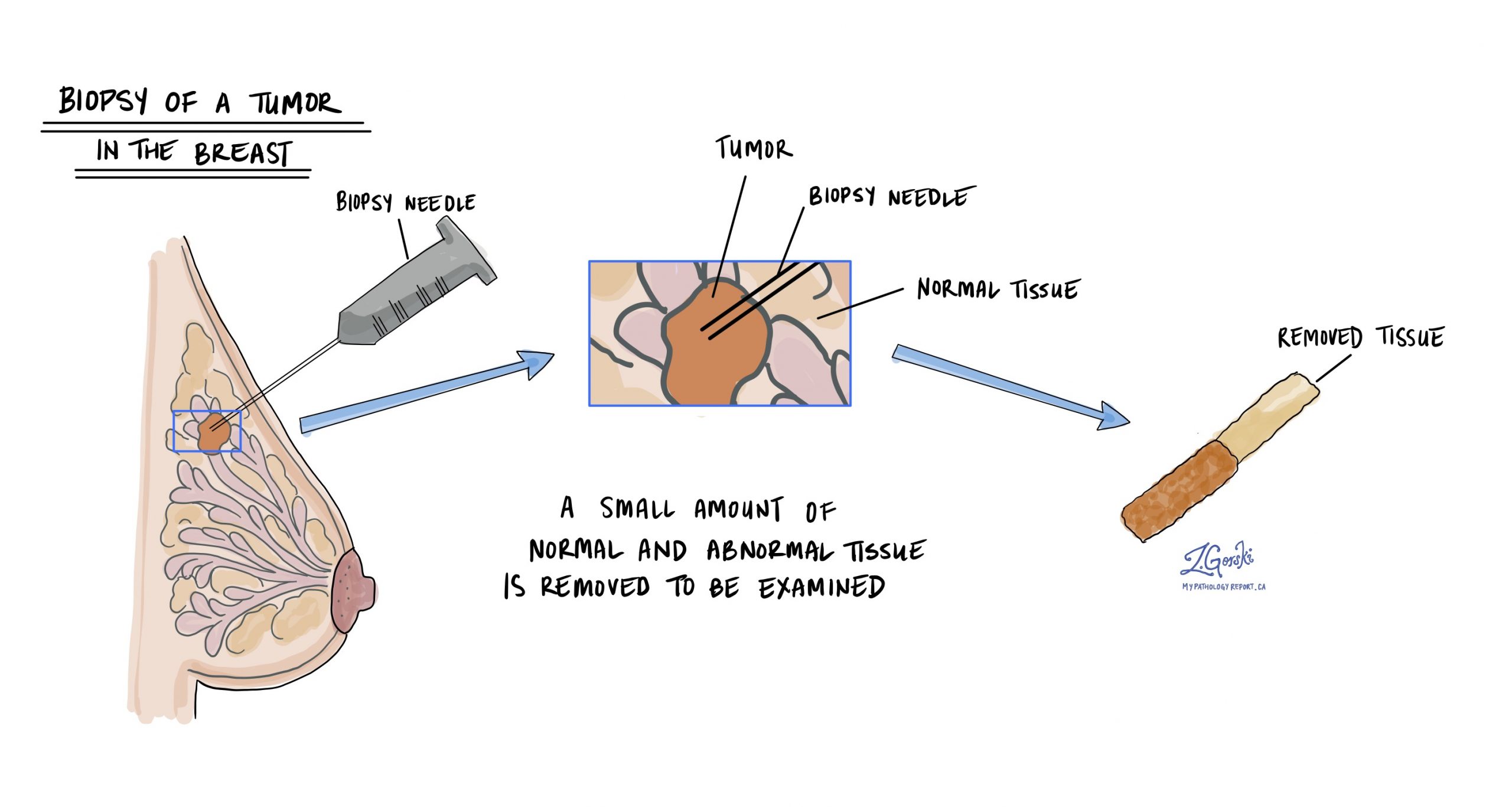
A biopsy is a medical procedure in which a small piece of tissue or a sample of cells is removed from the body for examination under a microscope. Pathologists use biopsies to diagnose a wide range of conditions, including cancer, infections, and inflammatory diseases. Examining cells and tissues closely enables pathologists to detect changes that are not visible with imaging tests, such as X-rays, CT scans, or MRIs.
Why is a biopsy performed?
Biopsies are performed for many reasons. Some of the most common include:
-
Diagnosis: To confirm or rule out conditions such as cancer, infection, or inflammation.
-
Cancer type and grade: If cancer is found, the biopsy helps determine the type of cancer and its aggressiveness (or rate of growth) as observed under the microscope.
-
Treatment planning: Biopsy samples can be tested for molecular markers or genetic changes that guide targeted therapy.
-
Monitoring treatment: Occasionally, repeat biopsies are performed to assess the effectiveness of a treatment.
-
Non-cancerous conditions: Biopsies can also help diagnose autoimmune diseases, chronic inflammatory conditions, and unusual infections.
Types of biopsies
The type of biopsy depends on where the abnormal tissue is located and the amount of tissue that needs to be examined.
Common types include:
-
Fine needle aspiration biopsy (FNAB): A thin needle removes a small number of cells or fluid, often from an organ or lump.
-
Core needle biopsy: A slightly larger needle removes a small cylinder (core) of tissue.
-
Excisional biopsy: The entire lump or area of concern is removed for examination.
-
Incisional biopsy: Only a portion of the abnormal tissue is removed.
-
Endoscopic biopsy: A small tool passed through an endoscope (a thin tube with a light and camera) collects tissue from areas such as the stomach, colon, or lung.
-
Skin biopsy: A small piece of skin is removed to look for rashes, growths, or other abnormalities.
What information may be included in the biopsy report?
After a biopsy, the tissue is sent to the laboratory, where it is processed and put on a glass slide. A pathologist examines the tissue under a microscope and writes a report. Depending on the reason for the biopsy, the report may include:
-
Whether the tissue is normal or abnormal.
-
The type of disease present. For example, whether the cells are cancerous, inflamed, or infected.
-
The grade of abnormal cells. In cancer, grade describes how abnormal the cells look and how likely they are to grow quickly.
-
Special tests or markers. Pathologists may perform immunohistochemistry or molecular tests to confirm the diagnosis or to guide treatment decisions.
-
Margins (in some cases). If an entire lump or lesion was removed, the report may describe whether the abnormal tissue extends to the edge of the biopsy.
This report provides doctors with essential information to inform their planning of the next steps in diagnosis or treatment.
What are the limitations of a biopsy?
A biopsy provides valuable information, but it has its limitations.
-
Sampling only part of the tissue: Because a biopsy removes only a small piece, it may not always provide a complete picture. Some areas of disease may be missed.
-
Preliminary diagnosis: A biopsy may confirm that cancer is present, but may not provide enough information to fully classify the cancer. A more complete diagnosis often comes after the entire tumor or organ is removed and examined.
-
Not a cure: Biopsies are typically performed for diagnosis, not treatment. If the abnormal tissue needs to be removed entirely, further surgery or another procedure is required.
Questions to ask your doctor
-
Why do I need a biopsy?
-
What type of biopsy will be performed?
-
What information will the biopsy give us?
-
How should I prepare for the biopsy?
-
What risks are involved in this procedure?
-
How long will it take to get the results?
-
What will be the next steps once the biopsy report is ready?