Cyst: Definition
A cyst is an abnormal, fluid-filled or air-filled space in the body, surrounded by a thin wall of tissue. The inside of a cyst can be empty (containing air), or it might be filled with fluid, blood, pus (dead immune cells), or other types of material. Cysts can develop anywhere in the body and can vary widely in size, from very small (visible only under a microscope) to large enough to be felt or easily seen.
Where do cysts commonly develop?
Cysts can form in many places throughout the body, but some common areas include:
-
Skin: Skin cysts are very common and usually harmless.
-
Ovaries: Ovarian cysts often form naturally during the menstrual cycle and frequently resolve without treatment.
-
Kidneys, liver, and other internal organs: These cysts may or may not require treatment, depending on their size and impact on the organ’s function.
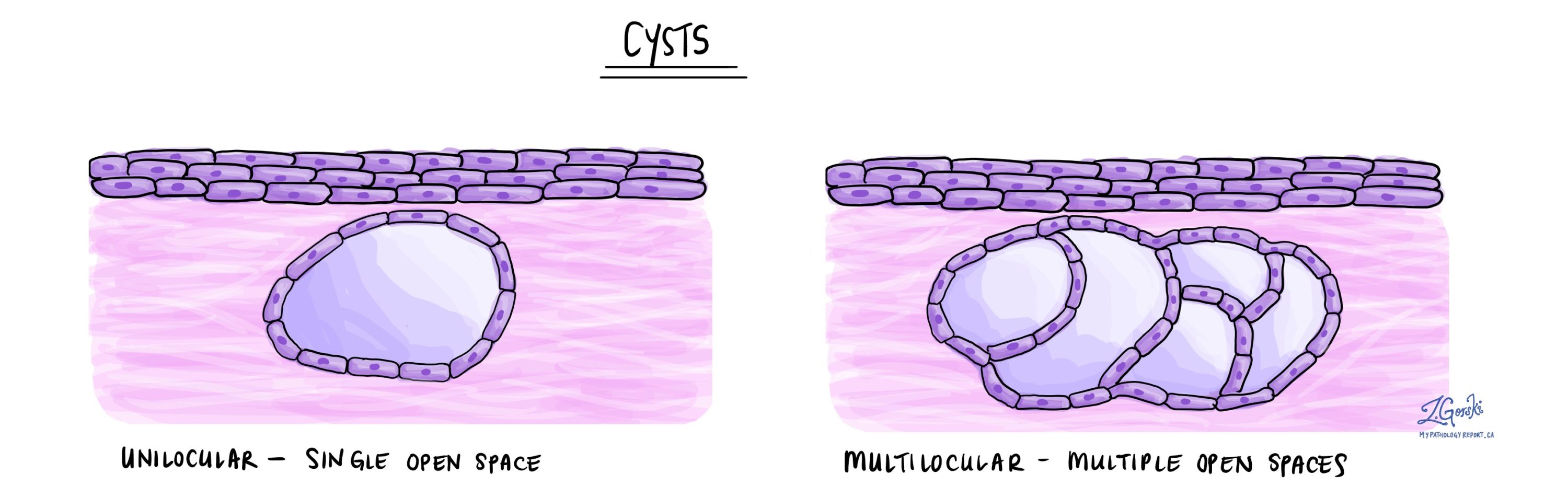
What is the difference between unilocular and multilocular cysts?
Pathologists often describe cysts based on how many internal compartments they have:
-
Unilocular cysts have a single open space inside.
-
Multilocular cysts have multiple smaller compartments or spaces within.
Knowing whether a cyst is unilocular or multilocular can help doctors better understand what type of cyst it might be and how it might behave.
Is a cyst benign or malignant?
Most cysts are benign (non-cancerous), meaning they don’t spread or cause significant harm. However, in some cases, a cyst can be malignant (cancerous). Pathologists carefully examine the tissue lining the inside of the cyst under a microscope to determine its nature. The types of cells lining the cyst help pathologists and doctors predict whether the cyst is harmless or potentially cancerous, guiding appropriate treatment decisions.
What is a ruptured cyst?
A ruptured cyst refers to a cyst that has broken open. When a cyst ruptures, its contents leak out into the surrounding tissue. This can cause inflammation, leading to pain, swelling, or other symptoms. When pathologists examine ruptured cysts under the microscope, they often see signs of inflammation, immune cells, and structures known as cholesterol clefts, which indicate past leakage of cyst contents.
Do cysts need treatment?
Whether a cyst requires treatment depends on its location, size, symptoms, and whether it is benign or malignant. Many cysts are harmless and do not require any intervention. Your doctor may recommend monitoring a cyst over time. However, if a cyst is causing symptoms, is growing, or is suspected of being cancerous, your doctor may recommend removing it surgically or treating it in other ways.
Questions to ask your doctor
If you have been diagnosed with a cyst, you might want to ask your doctor:
-
Is my cyst benign, or could it be cancerous?
-
Do I need further testing to learn more about my cyst?
-
What symptoms should I watch for that might suggest my cyst has ruptured or needs medical attention?
-
Will my cyst require treatment or regular monitoring?
Understanding cysts can help you stay informed and actively involved in decisions about your health.