Degenerative Changes: Definition
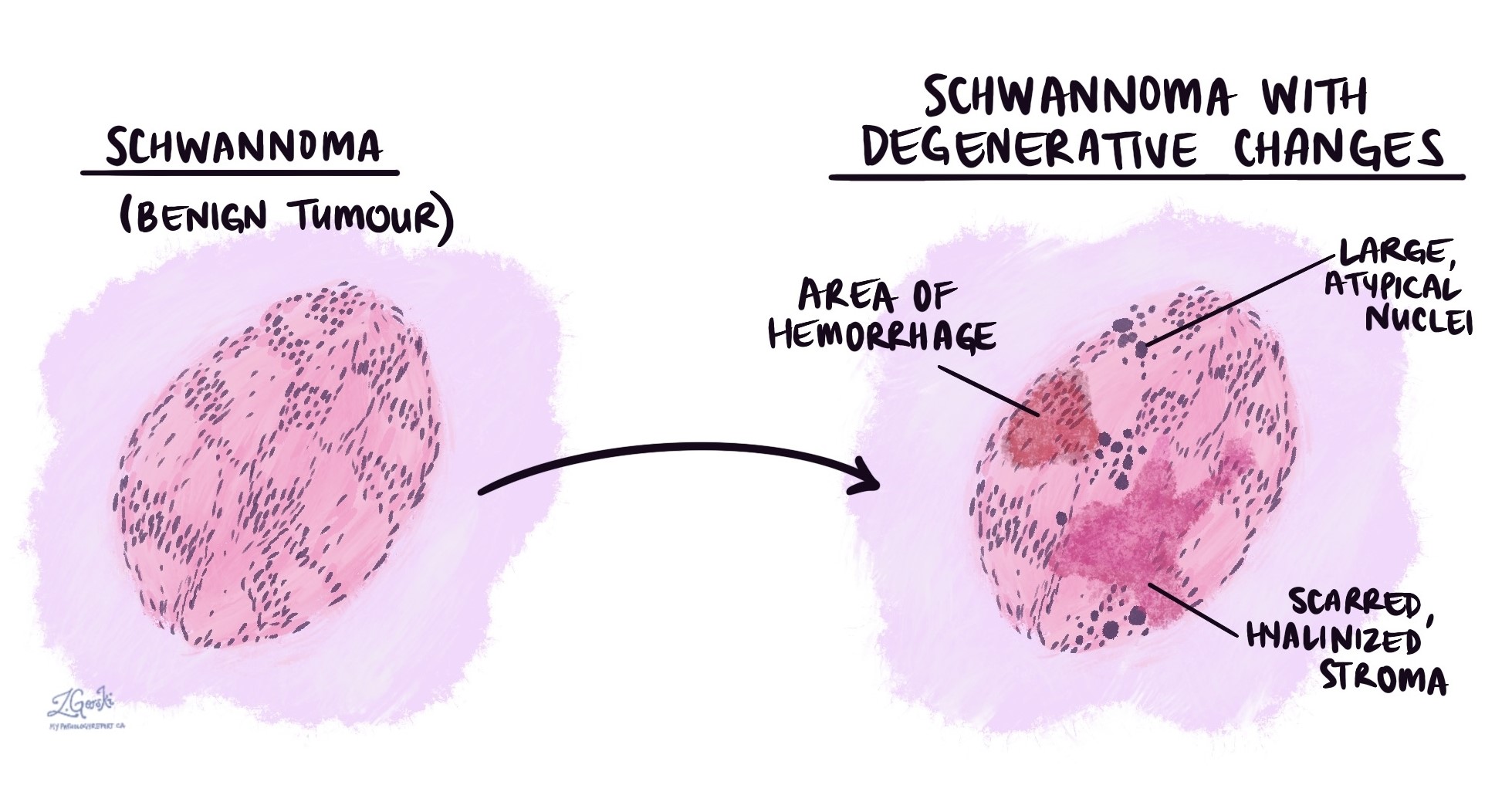
In pathology, the phrase degenerative changes describes tissue that has started to physically break down, losing its normal structure and appearance when viewed under a microscope. These changes can affect how well a tissue or organ functions. Although degenerative changes themselves are not cancerous, they may sometimes be seen in tumours, particularly if the tumour is large or has been treated previously.
Common examples of degenerative changes include:
-
Fibrosis: Scarring or thickening of tissue due to injury or long-term damage.
-
Hyalinization: Buildup of dense, glassy, protein-rich material within the tissue.
-
Hemorrhage: Bleeding within the tissue due to damage to blood vessels.
-
Cysts: Fluid-filled spaces forming within damaged tissue.
-
Reactive cytologic atypia: Cells that appear abnormal because of stress, injury, or inflammation.
These changes help pathologists understand the health of tissue and identify underlying problems.
What causes degenerative changes?
Several different factors can cause degenerative changes in tissues.
Common causes include:
-
Aging: Over time, tissues naturally lose their ability to repair and regenerate.
-
Exposure to toxins: Harmful substances like chemicals or drugs can damage tissues, leading to degenerative changes.
-
Chronic diseases: Conditions such as diabetes, high blood pressure (hypertension), and osteoarthritis commonly cause tissues to deteriorate.
-
Trauma or injury: Physical damage from accidents, surgeries, or biopsies can trigger degenerative changes.
-
Reduced blood supply (ischemia): When tissues don’t receive enough blood flow, cells begin to break down and lose normal function.
Tumours can also show degenerative changes, especially when they are large or grow quickly, because they may not receive an adequate blood supply. Additionally, degenerative changes can occur in tumours after treatment such as chemotherapy, radiation therapy, or surgery.
Are degenerative changes cancerous?
No, degenerative changes themselves are not cancerous. They represent damaged or aging tissue. However, certain types of tumours, including some cancers, can show these changes, particularly if the tumour has grown large or has previously been treated.
Why is recognizing degenerative changes important?
Understanding and identifying degenerative changes is important because:
-
They help pathologists distinguish between healthy tissue, damaged non-cancerous tissue, and tumour tissue.
-
They can provide clues about the tissue’s history, such as whether it was previously injured, underwent surgery, or was treated with chemotherapy or radiation.
-
Recognizing these changes helps pathologists and doctors properly interpret tissue samples and plan treatment accordingly.
Questions to ask your doctor
If your pathology report mentions degenerative changes, you may want to ask your doctor:
-
What might have caused these degenerative changes in my tissue?
-
Do these changes affect how my tissue or organ functions?
-
Are these degenerative changes related to my current medical condition or treatment?
-
Do I need any additional testing or follow-up because of these changes?
Understanding what degenerative changes mean can help you become actively involved in your healthcare decisions and have clear, informed conversations with your medical team.