What is hypocellular?
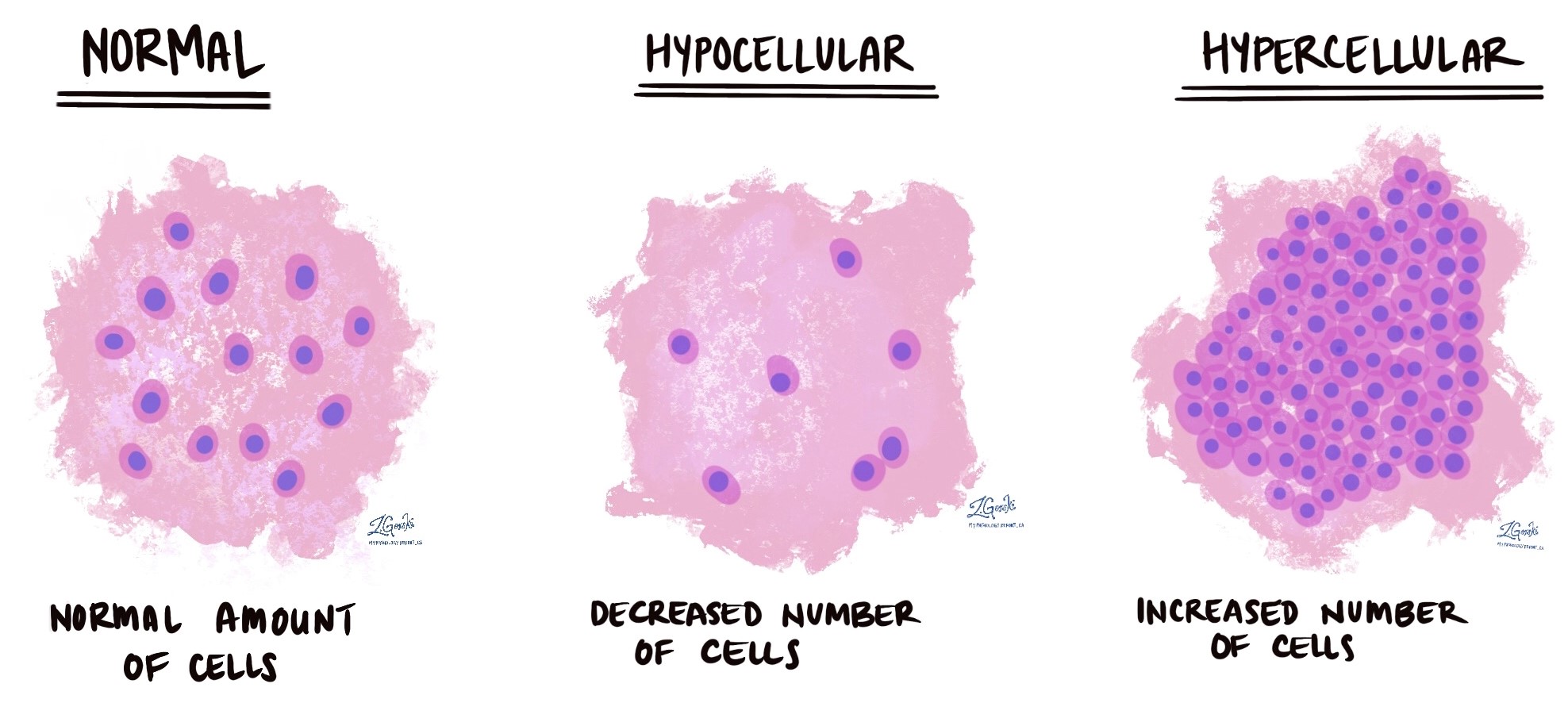
In pathology, hypocellular describes tissue or organs that contain fewer cells than expected. A decrease in the number of cells can occur naturally with age or result from certain medical conditions, treatments, or injuries. Hypocellularity can affect different types of tissues, but is most commonly discussed in relation to tumours or bone marrow.
What causes hypocellular tissue?
Common causes of hypocellular tissue include:
-
Aging: Many tissues, especially bone marrow, become naturally hypocellular over time.
-
Chemotherapy or radiation therapy: These treatments can reduce the number of healthy cells in tissues like bone marrow.
-
Autoimmune diseases: Conditions such as aplastic anemia involve the immune system mistakenly attacking healthy cells, leading to fewer cells.
-
Poor blood supply (ischemia): Reduced blood flow can result in cell loss within organs or tissues.
-
Certain tumours: Some benign (non-cancerous) tumours are characteristically hypocellular.
What types of tissue commonly become hypocellular?
Examples of tissues commonly described as hypocellular include:
-
Bone marrow: A hypocellular bone marrow has fewer blood-forming cells, potentially causing anemia or infections.
-
Tumours: Certain tumours, such as hypocellular variants of fibrous tumours, contain fewer cells and more connective tissue than typical tumours.
-
Connective tissues: Tissues like tendons or ligaments can appear hypocellular after injury or degeneration.
How is hypocellular tissue identified?
Pathologists identify hypocellular tissue by examining tissue samples under a microscope. They compare the number of cells to normal, healthy tissue from the same organ or tissue type. Pathologists may note hypocellularity when diagnosing certain conditions, assessing treatment effects, or evaluating tumours.
Is hypocellular tissue dangerous?
Hypocellular tissue itself isn’t necessarily harmful or dangerous. However, its clinical significance depends on the underlying cause and location. For instance:
-
Hypocellular bone marrow: Can lead to serious health problems like anemia or increased susceptibility to infections.
-
Hypocellular tumours: Often benign (non-cancerous) and may require only monitoring or surgical removal if symptomatic.
Hypocellular versus hypercellular
Hypocellular is the opposite of hypercellular:
-
Hypocellular means fewer cells than usual.
-
Hypercellular means more cells than usual.
Pathologists use these terms to describe changes seen in tissue samples, aiding diagnosis and guiding treatment decisions.
Questions to ask your doctor
-
Which of my tissues or organs was found to be hypocellular?
-
What could have caused the hypocellularity?
-
Is this finding serious, or does it require treatment?
-
Should I be concerned about developing complications due to hypocellular tissue?
-
Do I need any further testing or monitoring?