What is the transformation zone?
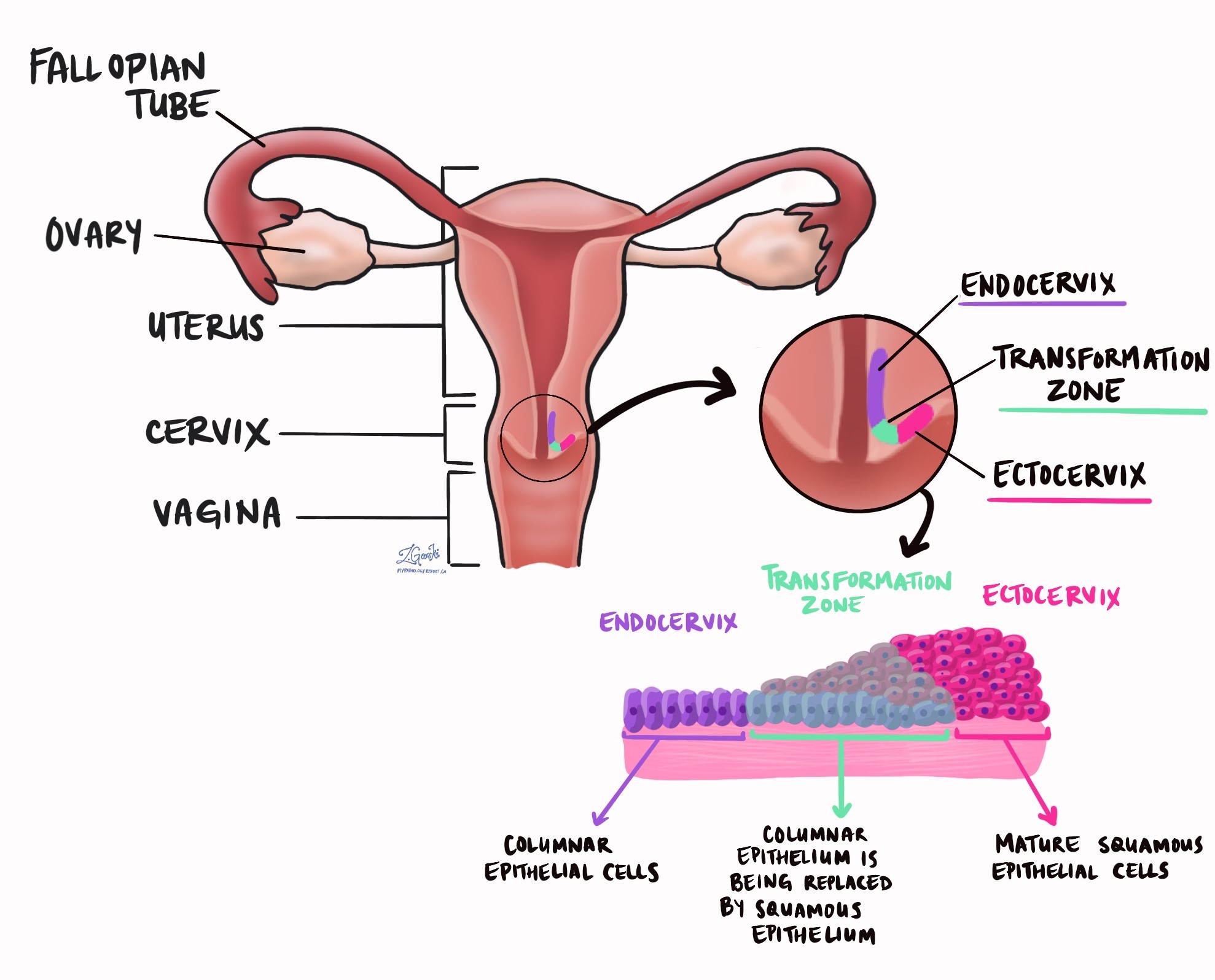
The transformation zone is a normal part of the cervix, the lower end of the uterus that opens into the vagina.
Two different types of cells cover the cervix:
-
Squamous cells, which cover the outer surface of the cervix (the ectocervix)
-
Glandular cells, which line the cervical canal leading into the uterus (the endocervix)
The transformation zone is the area where these two cell types meet. In this region, the glandular cells of the endocervix are gradually replaced by squamous cells through a natural process called squamous metaplasia. This change usually begins at puberty and continues through adulthood. Because this process is ongoing, the exact location of the transformation zone can shift over time.
Why is the transformation zone important?
The transformation zone is the most important area of the cervix for the early detection of cervical cancer. Most precancerous and cancerous conditions of the cervix begin here, including:
-
Low grade squamous intraepithelial lesion (LSIL).
-
High grade squamous intraepithelial lesion (HSIL).
-
Squamous cell carcinoma is the most common type of cervical cancer.
These conditions almost always develop after infection with human papillomavirus (HPV). Cells in the transformation zone are more vulnerable to HPV because they are actively changing from glandular to squamous cells.
Why is the transformation zone important in a Pap smear?
A Pap smear (Pap test) is designed to collect cells from the transformation zone because this is where abnormal changes are most likely to begin. A Pap smear that includes cells from this area is considered more complete and more reliable.
Your Pap smear report may state that the transformation zone was present or absent in the sample:
-
Present: The sample included cells from the transformation zone. This is ideal and means the most important area was tested.
-
Absent: No transformation zone cells were seen. This can happen for many reasons, including age, hormones, or sampling technique. Your doctor will decide whether the test should be repeated.
Screening the transformation zone is one of the most effective ways to prevent cervical cancer.
Questions to ask your doctor
-
Did my Pap smear include cells from the transformation zone?
-
If the transformation zone was absent, do I need to repeat the Pap test?
-
Did my sample show any HPV-related changes?
-
How often should I have cervical screening based on my results?
-
Should I also have an HPV test with my Pap smear?