Tumor Bed: Definition
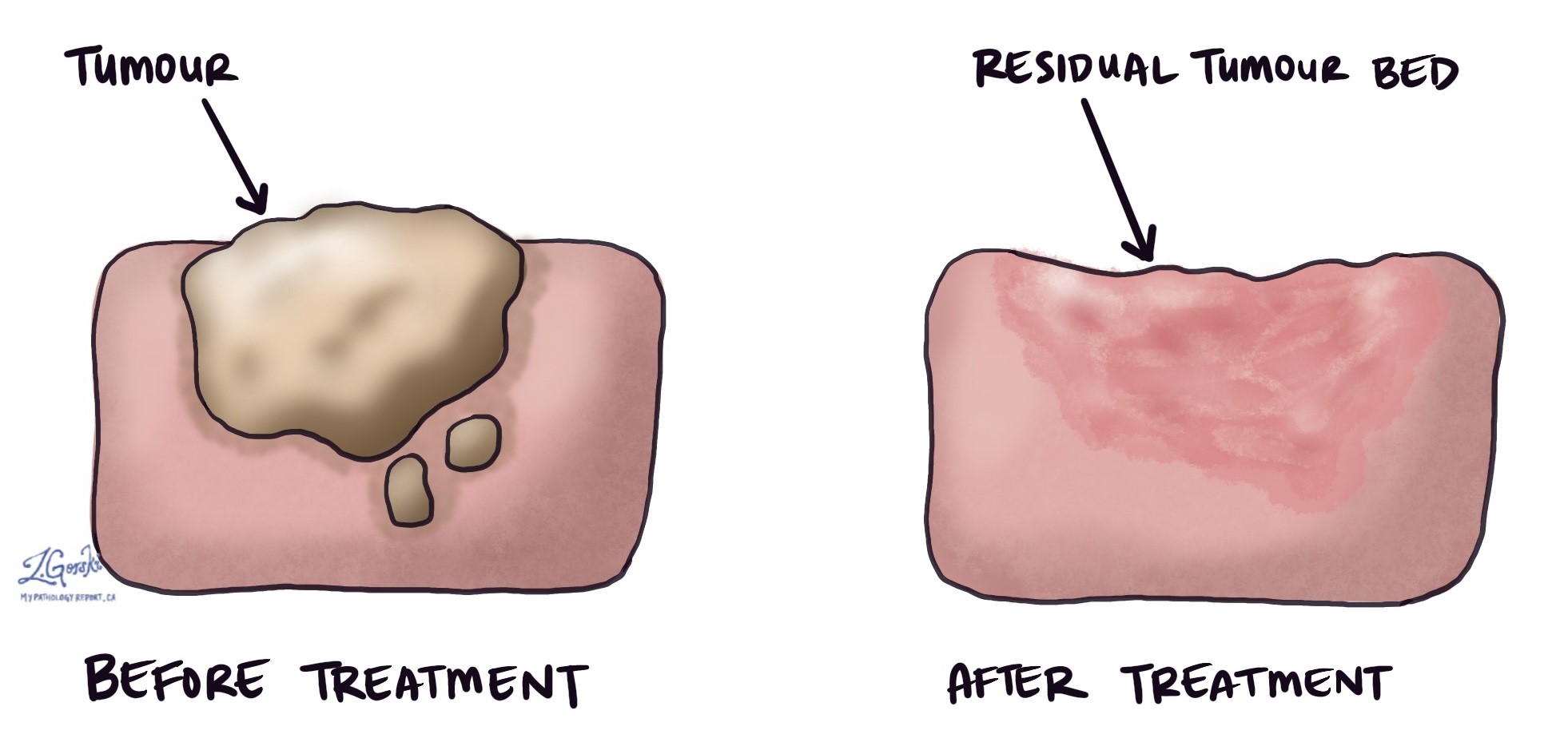
The tumor bed is the area of the body where a tumor used to be. Pathologists use the term most often after treatment, such as chemotherapy or radiation, has shrunk or destroyed a tumor. By examining the tumor bed, the pathologist can tell how well the treatment worked.
This article explains what the tumor bed is, what pathologists look for, how they score the response to treatment, and what your report may say.
What is the tumor bed?
The tumor bed is the place where a tumor was before treatment. Some cancers receive treatment before surgery. Doctors call this neoadjuvant therapy. It may include chemotherapy, radiation, or hormone therapy. After treatment, the tumor may shrink or disappear, but the area it occupied remains. The surgeon then removes that area so the pathologist can examine it.
Sometimes the tumor bed stays in the body. Doctors may then take biopsies from the area to look for remaining cancer cells.
Why do pathologists examine the tumor bed?
The tumor bed shows how much of the tumor the treatment destroyed and how much remains. This information matters for several reasons:
- Response to treatment. It shows whether the treatment worked well, partly, or not at all.
- Outlook. Less remaining cancer usually means a better prognosis.
- Next steps. Your doctors use the findings to decide whether you need more treatment.
What does the tumor bed look like under the microscope?
After treatment, the tumor bed often looks very different from the original tumor. The pathologist may see these changes:
- Scar tissue. Fibrosis often replaces the area where cancer cells died.
- Dead cells. Areas of necrosis show where the treatment killed the tumor.
- Inflammation. Immune cells may gather as the body clears away dead tissue. See inflammation.
- Mucin without cancer cells. After rectal cancer treatment, pools of acellular mucin may remain. They do not count as remaining cancer.
- Remaining cancer cells. Living cancer cells may remain, from single cells to large groups.
How do pathologists score the response to treatment?
Pathologists use a scoring system to describe how much cancer remains. The system depends on the cancer type.
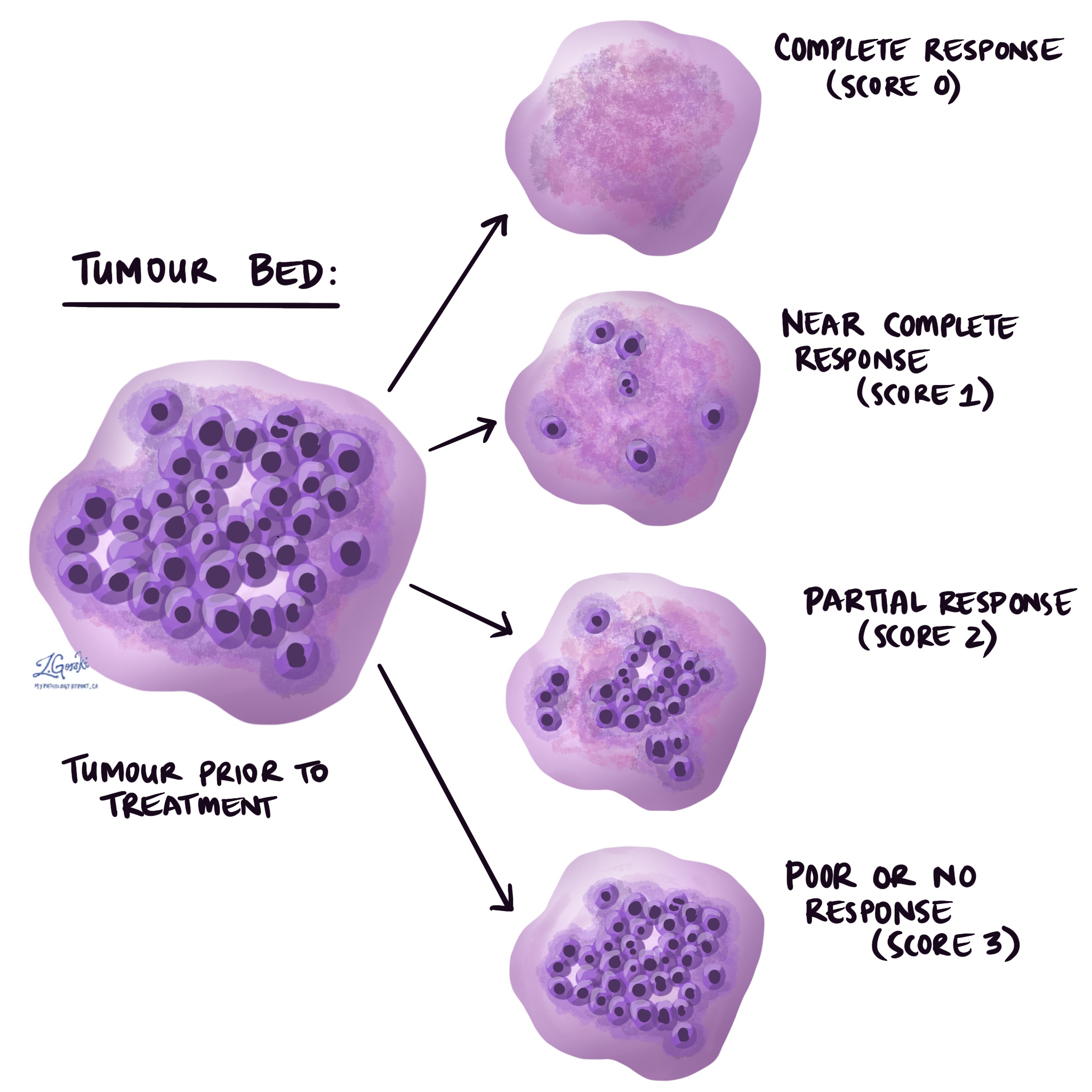
For some digestive tract cancers, pathologists use the CAP tumor regression score. It is also known as the modified Ryan score. It has four levels:
- Score 0. No living cancer cells. This is a complete response.
- Score 1. Single cells or rare small groups of cancer cells. This is a near-complete response.
- Score 2. Remaining cancer with clear signs of regression. This is a partial response.
- Score 3. Extensive remaining cancer with no clear regression. This is a poor or no response.
Other systems include:
- Mandard and Becker systems. Some laboratories use these systems instead, especially for esophageal and gastric cancers. The Mandard system compares living cancer with scar tissue. The Becker system estimates the percentage of remaining cancer cells.
- Residual cancer burden. Pathologists use this system for breast cancer. It combines the size of the tumor bed, the share of it that still contains cancer, and the cancer in the lymph nodes. The result runs from RCB-0, no remaining invasive cancer, to RCB-III, extensive remaining cancer. See residual cancer burden.
No single system works best for every cancer. What matters is that the pathologist clearly reports the response.
How does pre-surgical treatment affect the stage?
When a cancer receives treatment before surgery, the stage on your report starts with the letter y. For example, a stage of ypT1 means the pathologist staged the cancer after that treatment. The TNM article explains these letters. The stage describes the remaining cancer, not the original tumor.
What might my report say about the tumor bed?
Reports describe the tumor bed in a few standard ways. Each laboratory phrases them a little differently:
- Tumor bed size. The report gives the size of the treated area, usually in centimeters.
- No residual cancer. The pathologist found no living cancer cells in the tumor bed. This is a complete response.
- Residual cancer present. Living cancer cells remain. The report may give their size or share of the tumor bed.
- A response score. The report may give a tumor regression score (e.g., 1) or a residual cancer burden class (e.g., RCB-I).
- Treatment effect. The report describes treatment-related changes, such as fibrosis or necrosis.
Questions to ask your doctor
- Did the pathologist find any living cancer cells in the tumor bed?
- What was my response score, and what does it mean?
- Was my response complete, partial, or minimal?
- Did any lymph nodes still contain cancer?
- What is my stage after treatment?
- Do I need more treatment because of these results?
- How will you watch for the cancer coming back?