What is non-necrotizing granulomatous inflammation?
Non-necrotizing granulomatous inflammation is a term used by pathologists to describe a specific type of long-lasting or chronic inflammation seen in the body. It occurs when your immune system forms small, round structures called granulomas to isolate and remove something it sees as harmful. Granulomas act like barriers, helping to surround and contain the harmful substance or material.
What is a granuloma?
A granuloma is a small collection of immune cells that come together in response to a problem, such as an infection, foreign material, or a medical condition. The immune cells in a granuloma include:
- Lymphocytes: Lymphocytes are cells that help your immune system recognize harmful substances.
- Histiocytes: Histiocytes are specialized immune cells that “eat” harmful material. In granulomas, histiocytes are called “epithelioid” because they stick together, forming a layer that looks like skin cells under the microscope.
- Multinucleated giant cells: Multinucleated giant cells are large cells formed when several histiocytes join to help fight off harmful substances.
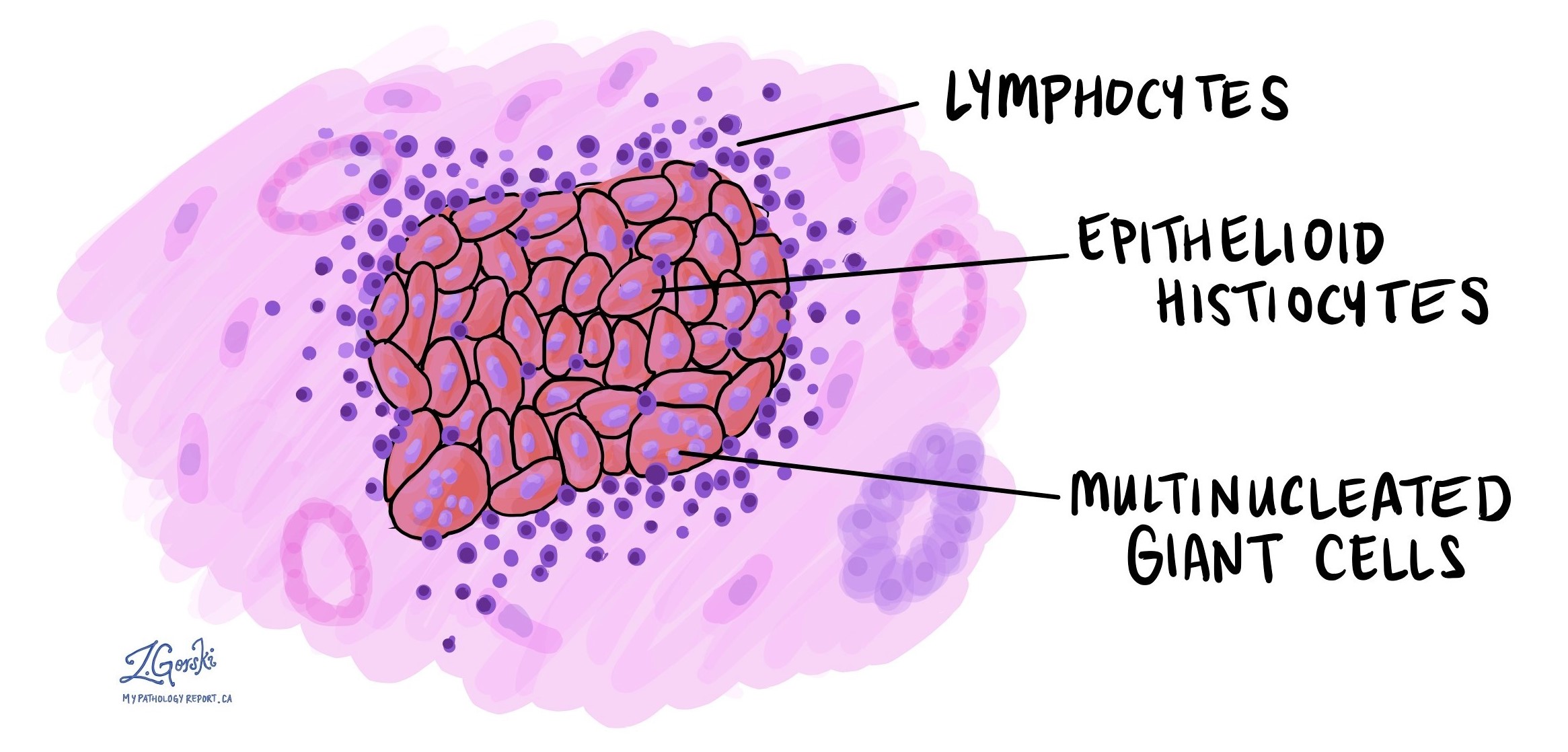
What does “non-necrotizing” mean?
The term “non-necrotizing” means that there are no dead cells in the center of the granuloma. In contrast, a necrotizing granuloma has dead cells in its middle, often seen in certain types of infections, such as tuberculosis. The absence of dead cells helps pathologists narrow down the potential causes of the granuloma.
What conditions are associated with non-necrotizing granulomatous inflammation?
Non-necrotizing granulomas can be seen in a variety of medical conditions, including:
- Sarcoidosis: A condition where granulomas form in multiple organs, such as the lungs and lymph nodes, without a clear cause.
- Crohn’s disease: A type of inflammatory bowel disease where granulomas can form in the digestive tract.
- Rheumatoid arthritis: An autoimmune condition that causes inflammation in the joints and can sometimes produce granulomas.
- Infections: Some bacterial, fungal, and parasitic infections can cause granulomas without necrosis.
- Foreign material: Granulomas may form around things like surgical sutures, splinters, or tattoo ink as the body tries to remove or isolate the material.
Why is this finding important?
The presence of non-necrotizing granulomas in a tissue sample gives doctors clues about what might be causing inflammation in your body. Additional tests or clinical information may be needed to identify the specific cause. Understanding the source of the granulomas helps guide treatment to address the underlying condition.