Epidermis: Definition
The epidermis is the thin, outermost layer of your skin. It acts as a protective shield between your body and the outside world. Although it is only about as thick as a sheet of paper in most places, the epidermis plays a crucial role in preventing harmful germs, chemicals, and physical forces from damaging your body. It also helps keep water inside your body, preventing dehydration.
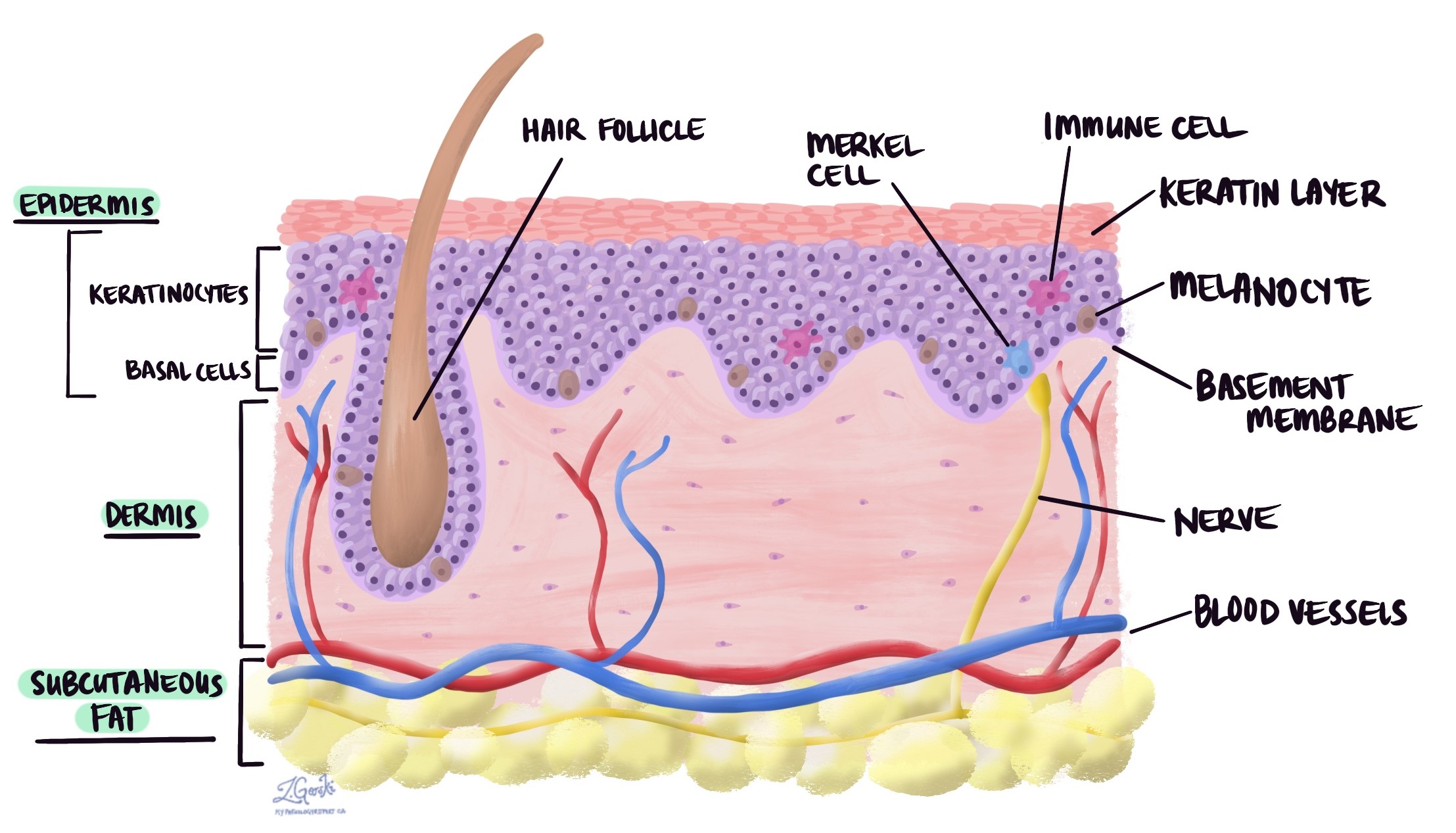
What is the epidermis made of?
The epidermis is made up mainly of keratinocytes, a type of cell that produces the strong protein keratin. This protein gives your skin its strength and helps protect it from damage. The epidermis also contains other specialized cells:
-
Melanocytes – Melanocytes produce melanin, the pigment that gives skin its color and helps protect against sun damage.
-
Langerhans cells – Langerhans cells are part of the immune system, helping your body detect and respond to harmful substances or infections.
-
Merkel cells – Merkel cells are nerve-related cells that help with the sensation of touch.
Layers of the epidermis
The epidermis is organized into layers, each with a specific role:
-
Stratum basale (basal layer): The bottom layer where new keratinocytes are created.
-
Stratum spinosum (spiny layer): Provides strength and flexibility.
-
Stratum granulosum (granular layer): Cells start producing large amounts of keratin and other proteins.
-
Stratum lucidum: Found only in thick skin like the palms and soles, adding extra protection.
-
Stratum corneum (horny layer): The outermost layer made of flat, dead cells that are constantly shed and replaced.
What does the epidermis do?
The epidermis performs several important functions:
-
Barrier protection: Blocks harmful bacteria, viruses, and chemicals.
-
Water retention: Prevents your body from losing too much water.
-
Sun protection: Melanin in the epidermis absorbs UV rays.
-
Skin renewal: Constantly sheds old cells and replaces them with new ones from below.
-
Immune defense: Helps detect infections and signal the immune system.
Conditions that affect the epidermis
The epidermis can be affected by many different skin conditions and diseases, including:
-
Eczema and dermatitis: These are inflammatory skin conditions that damage the barrier function of the epidermis. In eczema, the skin becomes dry, itchy, and inflamed, often due to a combination of genetic, immune, and environmental factors. Dermatitis is a general term for skin inflammation and can be caused by allergens, irritants, or repeated friction, which can weaken the epidermis and make it more vulnerable to infection.
-
Psoriasis: This is a chronic condition in which keratinocytes in the epidermis grow and move to the skin surface too quickly, leading to thick, scaly patches. The rapid turnover of skin cells prevents them from maturing properly, resulting in the buildup of layers of abnormal epidermal cells. Psoriasis is considered an autoimmune disease, and its severity can vary from small patches to widespread skin involvement.
-
Skin cancers: The epidermis can be the starting point for several types of cancer. Basal cell carcinoma arises from the basal layer, squamous cell carcinoma develops from squamous cells in the upper layers, and melanoma starts from melanocytes found within the epidermis. These cancers can look very different on the skin and may require surgery or other treatments depending on their type and stage.
-
Autoimmune diseases: In some autoimmune skin disorders, the immune system attacks parts of the epidermis or the structures that connect it to deeper skin layers. In pemphigoid, the immune system damages the connections between the epidermis and the dermis, causing large, tense blisters. In pemphigus, the immune system attacks the bonds between keratinocytes, leading to fragile blisters and erosions that break easily.
-
Infections: The epidermis can be affected by bacterial, viral, or fungal infections. Bacterial infections, such as impetigo, cause sores and crusting on the skin’s surface. Viral infections, like those caused by herpes simplex virus, can create painful blisters. Fungal infections, such as athlete’s foot or ringworm, invade the outer layers of the epidermis, causing redness, scaling, and itching.
Why might the epidermis be mentioned in my pathology report?
If your pathology report mentions the epidermis, it may be describing the appearance of this skin layer in a biopsy sample. The report could note whether the epidermis looks normal, shows signs of inflammation, infection, injury, precancerous changes, or cancer.
Questions to ask your doctor
-
Why is the epidermis mentioned in my report?
-
Are the changes in my epidermis normal or abnormal?
-
Do the findings suggest a specific skin condition or disease?
-
Will I need treatment or follow-up?