What is helicobacter pylori?
Helicobacter pylori (H. pylori) is a type of bacteria that infects the stomach. It is one of the most common bacterial infections worldwide, usually acquired during childhood. H. pylori is unique because it can survive in the stomach’s acidic environment. It produces an enzyme called urease, which neutralizes stomach acid, allowing the bacteria to colonize the stomach lining.
What conditions are associated with Helicobacter pylori infection?
H. pylori infection is associated with several gastrointestinal conditions, including:
- Gastritis: Inflammation of the stomach lining caused by the bacteria. Pathologists often refer to this condition as Helicobacter-associated gastritis or chronic active gastritis.
- Peptic ulcers: Sores that develop on the stomach lining or the first part of the small intestine (duodenum). H. pylori is a leading cause of peptic ulcers.
- Gastric (stomach) cancer: Long-term infection with H. pylori increases the risk of developing a type of stomach cancer called adenocarcinoma.
- MALT lymphoma: A rare type of cancer that affects the immune tissue in the stomach lining. H. pylori infection is a known risk factor for this condition.
What are the symptoms of Helicobacter pylori infection?
Many people with H. pylori infection do not experience any symptoms. However, when symptoms do occur, they may include:
- Abdominal pain or discomfort: Often described as a burning or gnawing sensation in the upper abdomen.
- Nausea and vomiting
- Bloating
- Loss of appetite
- Frequent burping
- Unintentional weight loss
These symptoms are often associated with conditions like gastritis or peptic ulcers caused by the infection.
What are the complications of long-term Helicobacter pylori infection?
Long-term H. pylori infection can lead to serious complications if left untreated, including:
- Chronic gastritis: Persistent inflammation of the stomach lining can lead to damage and atrophy (thinning) of the stomach lining over time.
- Peptic ulcers: Ongoing infection increases the risk of developing ulcers in the stomach or duodenum, leading to bleeding or perforation (a hole in the stomach or intestine).
- Gastric cancer: Chronic inflammation caused by H. pylori can increase the risk of developing a type of stomach cancer called adenocarcinoma. The risk is higher in individuals with certain genetic predispositions.
- MALT lymphoma: Long-standing H. pylori infection is a known risk factor for this rare type of stomach cancer.
How do doctors test for Helicobacter pylori infection?
Doctors use several tests to detect H. pylori infection:
- Breath test (urea breath test): This test involves swallowing a substance containing urea. If H. pylori is present, the bacteria break down the urea, releasing carbon dioxide, which can be detected in the breath.
- Stool antigen test: This test detects the presence of H. pylori antigens (proteins) in a stool sample, indicating an active infection.
- Blood test: Blood tests can detect antibodies against H. pylori but are less commonly used because they cannot distinguish between a current and past infection.
- Endoscopy with biopsy: During an endoscopy, a small camera is passed into the stomach to take a biopsy tissue sample from the stomach lining. The biopsy is then examined under a microscope for the presence of H. pylori.
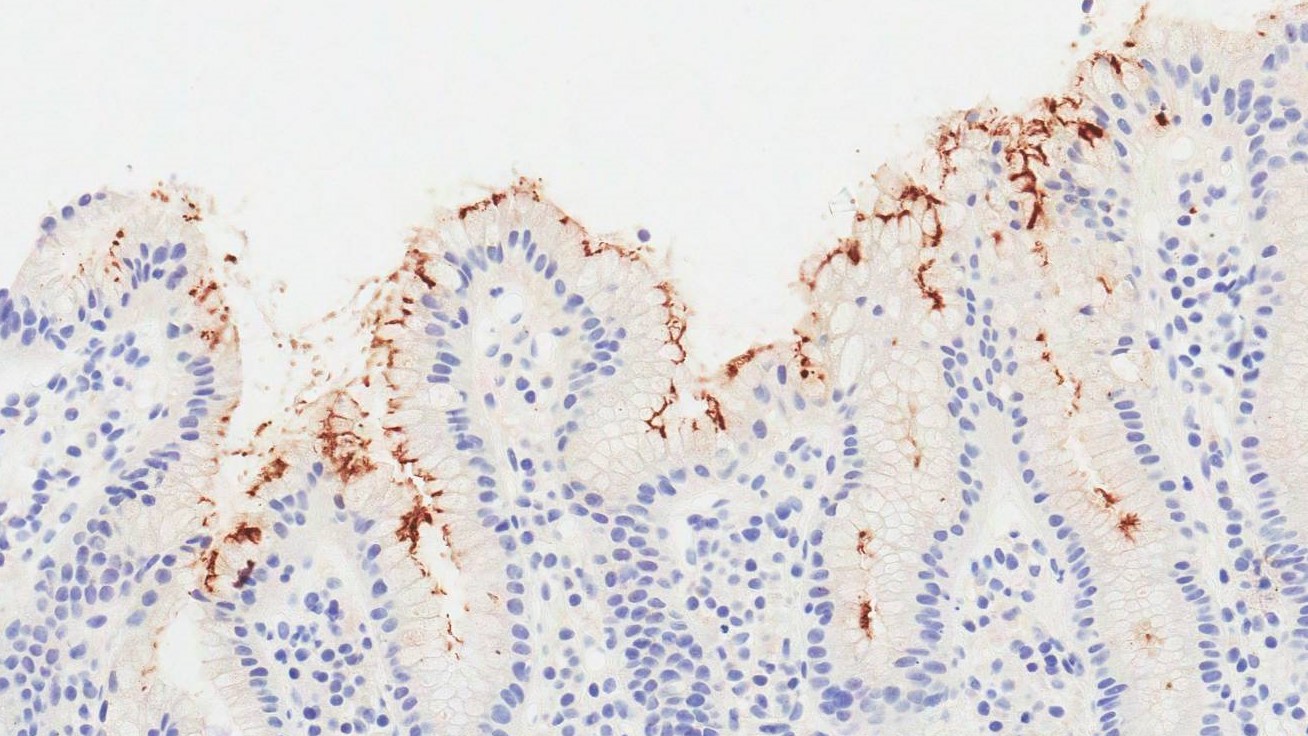
When examining a biopsy under the microscope, H. pylori appears as small, curved, or spiral-shaped bacteria on the surface of the stomach lining. Pathologists may use special stains, such as Warthin-Starry or Giemsa stain, to highlight the bacteria. Additionally, immunohistochemistry can be used, where specific antibodies are applied to the tissue to bind to H. pylori, making the bacteria easier to identify.
What is the treatment for Helicobacter pylori infection?
The treatment for H. pylori infection typically involves a combination of antibiotics to kill the bacteria and medications that reduce stomach acid, allowing the stomach lining to heal. This treatment is often referred to as triple therapy or quadruple therapy and usually includes:
- Two or more antibiotics: Commonly used antibiotics include clarithromycin, amoxicillin, and metronidazole.
- Proton pump inhibitors (PPIs): These medications reduce stomach acid production, helping to alleviate symptoms and enhance the effectiveness of antibiotics.
- Bismuth subsalicylate: This medication, sometimes included in quadruple therapy, helps protect the stomach lining and has mild antibacterial properties.
The course of treatment typically lasts 10 to 14 days. After treatment, a follow-up test may be recommended to ensure that the infection has been eradicated.