T Cells: Definition
T cells are a type of white blood cell that play a critical role in the body’s immune system. They are part of the adaptive immune response, which enables them to recognize specific infections and abnormal cells. T cells help protect the body by directly attacking harmful invaders, coordinating other immune cells, and remembering past infections.
T cells are called “T” cells because they mature in an organ called the thymus, located in the chest behind the breastbone.
What do T cells do?
T cells perform many important immune functions.
The main types of T cells include:
-
Helper T cells (CD4+ T cells): These cells act like coordinators. They release signals that activate B cells, other T cells, and immune system cells like macrophages. This helps the immune system mount a strong and effective response.
-
Cytotoxic T cells (CD8+ T cells): These are “killer” cells that directly attack and destroy virus-infected cells, cancer cells, or cells damaged in other ways.
-
Regulatory T cells: These cells help keep the immune system in balance by preventing it from overreacting and attacking normal, healthy tissue.
Together, T cells protect the body against infection and play an important role in preventing cancer. They also help provide immune memory, which allows the body to respond quickly if the same infection comes back.
Where are T cells found in the body?
T cells are found throughout the immune system. They circulate in the bloodstream and move into tissues where infections are present. They are also concentrated in immune system organs such as lymph nodes, the spleen, the thymus, tonsils, and the bone marrow.
These locations allow T cells to meet other immune cells and quickly respond to infections or abnormal cells.
What types of cancer start from T cells?
Cancers that begin in T cells are called T-cell lymphomas or T-cell leukemias. These are less common than B-cell cancers but can occur in lymph nodes, bone marrow, blood, skin, or other tissues.
Examples of T cell cancer include:
-
Mycosis fungoides and Sézary syndrome (types of T-cell lymphoma that affect the skin).
These cancers occur when T cells grow uncontrollably and form abnormal collections in tissues.
What do T cells look like under the microscope?
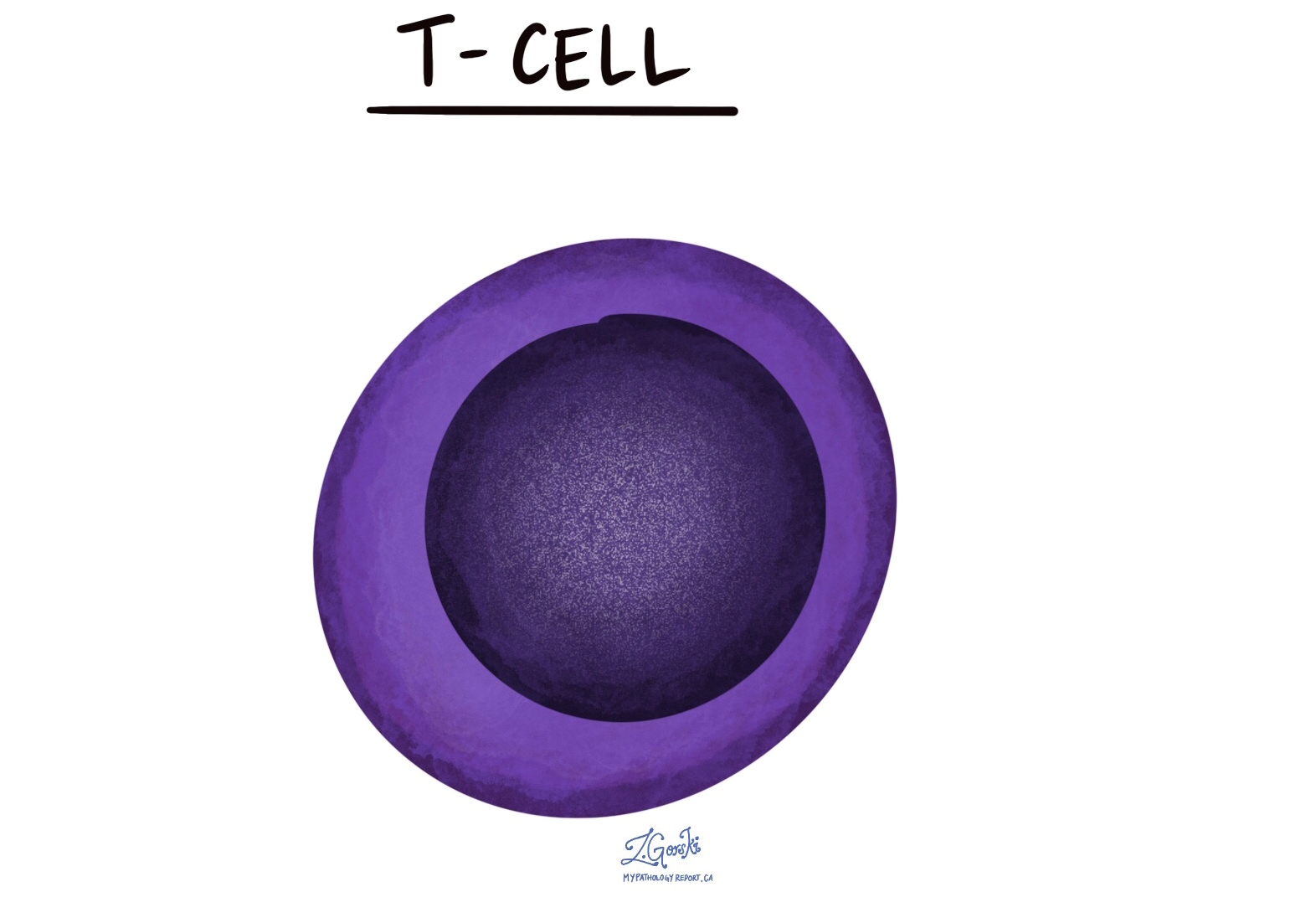
Under the microscope, T cells appear as small round cells with a dark nucleus and very little cytoplasm, which looks like a thin rim around the nucleus. Because T cells and B cells look very similar, pathologists often use special tests such as immunohistochemistry or flow cytometry to tell them apart. These tests detect unique proteins on the surface of T cells, such as CD3, which is a marker found on almost all T cells.
Why are T cells important in pathology reports?
T cells may be mentioned in pathology reports when pathologists examine biopsies or blood samples for signs of infection, inflammation, or cancer. The report may describe whether T cells are increased, decreased, or abnormal. For example, an increase in T cells in the skin may support a diagnosis of cutaneous T-cell lymphoma, while a balanced number of T cells may indicate a normal immune response.
Questions to ask your doctor
-
Why were T cells mentioned in my pathology report?
-
Are the T cells normal, or do they show signs of disease?
-
Could these findings suggest lymphoma, leukemia, or another immune condition?
-
Were special tests done to confirm the type of T cells present?
-
How do these findings affect my treatment or follow-up care?