What is tumor regression?
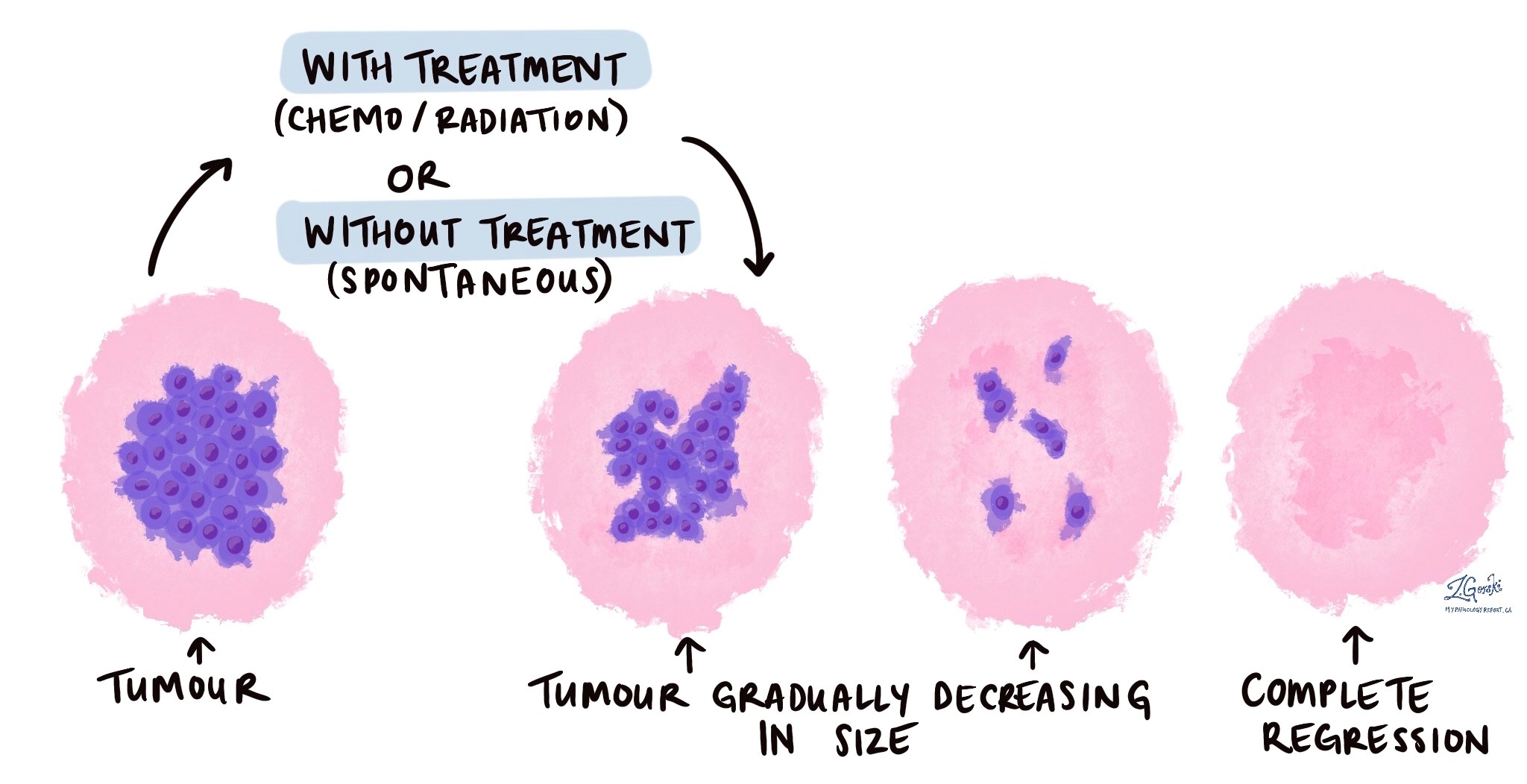
Tumour regression refers to the reduction in size or complete disappearance of a tumour, either spontaneously or as a result of treatment. In pathology, tumour regression is assessed by examining tissue samples to determine the extent of the decrease in tumour cell population and changes in the tumour’s structure.
What causes tumour regression?
Treatment-induced regression
Treatment-induced tumour regression refers to the reduction in size or complete disappearance of a tumour as a direct result of medical interventions such as chemotherapy, radiation therapy, immunotherapy, or targeted therapy.
- Chemotherapy: Chemotherapeutic agents can kill cancer cells, leading to the shrinkage or disappearance of the tumour.
- Radiation therapy: Radiation damages the DNA of cancer cells, causing cell death and tumour shrinkage.
- Immunotherapy: This treatment enhances the body’s immune system to target and destroy cancer cells.
- Targeted therapy: These drugs target molecular pathways essential for tumour growth and survival.
Spontaneous regression
Spontaneous tumour regression is the partial or complete disappearance of a tumour without any specific medical treatment or intervention. This phenomenon is rare and not fully understood. However, it often involves the immune system or hormone-sensitive tumours.
- Immune response: The body’s immune system may occasionally mount a strong response against the tumour, leading to its regression.
- Hormonal changes: Changes in hormone levels may cause certain tumours, such as hormone-sensitive breast cancers, to regress.
Why is tumour regression important?
- Prognostic indicator: Tumour regression often indicates a favourable response to treatment and is associated with improved survival rates.
- Treatment evaluation: Assessing the degree of tumour regression helps determine the effectiveness of a given therapy. This can guide future treatment decisions, such as continuing, modifying, or discontinuing a particular treatment regimen.
- Research: Understanding the mechanisms behind tumour regression can lead to developing new therapies and improving existing ones.
How do pathologists assess tumour regression?
Pathologists determine the amount of tumour regression by examining the tissue under a microscope. The steps involved in this process include:
- Histological examination: Tissue samples from the tumour are stained and examined microscopically. Pathologists look for changes in the tumour’s architecture and cellularity.
- Identification of necrosis: The presence of necrotic areas where cancer cells have died is a key indicator of regression. Pathologists assess the extent and distribution of necrosis within the tumour.
- Fibrosis and scarring: Tumour regression is often accompanied by fibrosis (formation of scar tissue) and other reparative changes. Pathologists look for these signs as evidence of previous tumour presence and subsequent regression.
- Tumour bed analysis: The concept of the tumour bed refers to the area where the tumour was originally located before treatment. Pathologists examine the tumour bed for residual cancer cells and signs of regression, such as necrosis and fibrosis. The degree of cellularity (presence of remaining cancer cells) in the tumour bed is assessed to determine the extent of regression.
- Quantitative assessment: In some cases, pathologists use specific scoring systems to quantify the degree of tumour regression. These systems may consider factors such as the percentage of necrosis, the extent of fibrosis, and the presence of residual viable tumour cells.
- Comparative analysis: Pathologists may compare pre-treatment and post-treatment tissue samples to evaluate changes in the tumour. This comparison helps in understanding the effectiveness of the treatment and the extent of tumour regression.
Types of tumours most likely to show regression
- Lymphomas: These cancers of the lymphatic system are known to show significant regression, especially with chemotherapy and radiation therapy.
- Germ cell tumours: Testicular cancer and other germ cell tumours often respond well to chemotherapy, resulting in marked regression.
- Melanoma: This skin cancer can exhibit regression with immunotherapy, targeted therapy, and occasionally even spontaneously.
- Breast cancer: Hormone receptor-positive breast cancers may regress with hormonal therapies.
- Neuroblastoma: This pediatric cancer can sometimes show spontaneous regression, particularly in infants.