Hematopoietic Cells: Definition
Hematopoietic cells are responsible for producing all the different types of blood cells in the body. The term “hematopoietic” comes from the Greek words “hema,” meaning blood, and “poiesis,” meaning formation. The process of creating these cells is called hematopoiesis. These cells are essential for the continuous production of blood cells, including red blood cells (RBCs), white blood cells (WBCs), and platelets. Hematopoietic cells are the foundation of the body’s blood and immune systems.
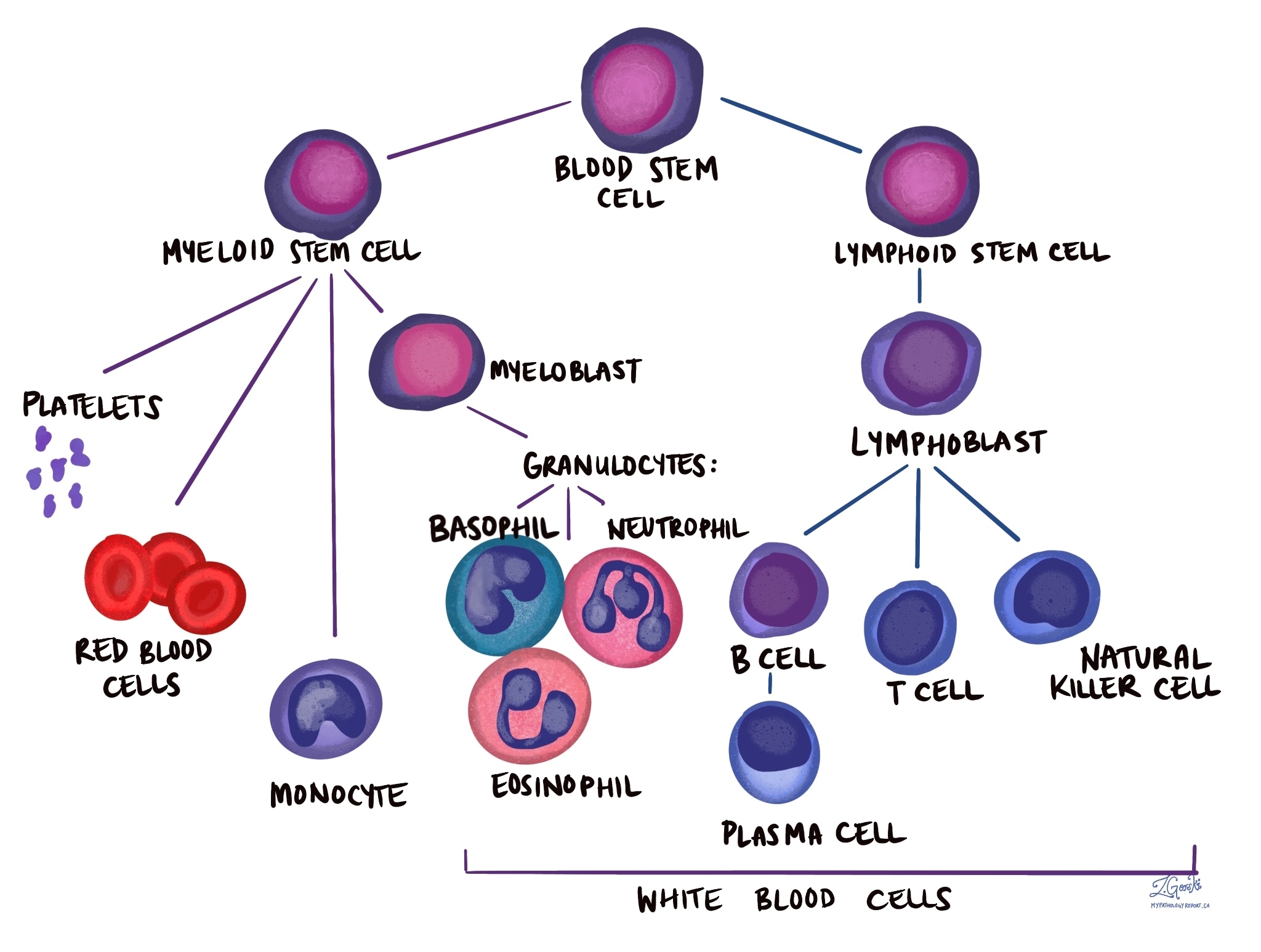
Where are they normally found?
Hematopoietic cells are primarily found in the bone marrow, the soft, spongy tissue inside bones. The bone marrow is the main site of blood cell production. In early development (such as in the fetus), hematopoietic cells can also be found in other organs like the liver and spleen, but in adults, they are primarily concentrated in the bone marrow. Hematopoietic cells can also circulate in the blood, especially during certain conditions or treatments like stem cell transplants.
What are the types of hematopoietic cells?
Hematopoietic cells include several different types of cells, each with a specific role in producing blood cells:
- Hematopoietic stem cells (HSCs): These are the “parent” cells that give rise to all other blood cells. They can self-renew (make more of themselves) and differentiate into various types of blood cells.
- Progenitor cells: These cells are descendants of hematopoietic stem cells. They are more specialized than stem cells but still have the potential to develop into different types of blood cells. There are two main types of progenitor cells:
- Myeloid progenitor cells: These give rise to red blood cells, platelets, and certain types of white blood cells (like neutrophils, eosinophils, and monocytes).
- Lymphoid progenitor cells: These develop into different types of white blood cells, specifically lymphocytes (such as B cells, T cells, and natural killer cells).
- Mature blood cells: These are the fully developed blood cells that perform specific functions in the body:
- Red blood cells (erythrocytes): Carry oxygen from the lungs to the rest of the body.
- White blood cells (leukocytes): Help the body fight infections. There are different types of white blood cells, each with a unique role in the immune system.
- Platelets (thrombocytes): Help the blood clot to stop bleeding.
What conditions are associated with abnormal hematopoietic cells?
Abnormal hematopoietic cells can be associated with a variety of conditions, including:
- Anemia: This condition occurs when the number of red blood cells or hemoglobin decreases, leading to a lack of oxygen in the body. It can result from problems with hematopoietic cells in the bone marrow.
- Leukemia: This type of cancer originates in the bone marrow and affects the production of white blood cells. In leukemia, the bone marrow produces abnormal white blood cells, which can crowd out healthy blood cells.
- Lymphoma: A type of cancer that begins in the lymphoid progenitor cells, often involving lymph nodes, which are part of the immune system.
- Myelodysplastic syndromes (MDS): A group of disorders caused by poorly functioning hematopoietic cells in the bone marrow, leading to problems with the production of blood cells.
- Bone marrow failure syndromes: These include conditions where the bone marrow does not produce enough blood cells, such as aplastic anemia.
- Polycythemia vera: A condition in which the bone marrow produces too many red blood cells, leading to thickened blood and an increased risk of blood clots.
Depending on which type of blood cell is affected, these conditions can lead to a range of symptoms, and they often require specialized treatment to manage the abnormal hematopoietic cells.