

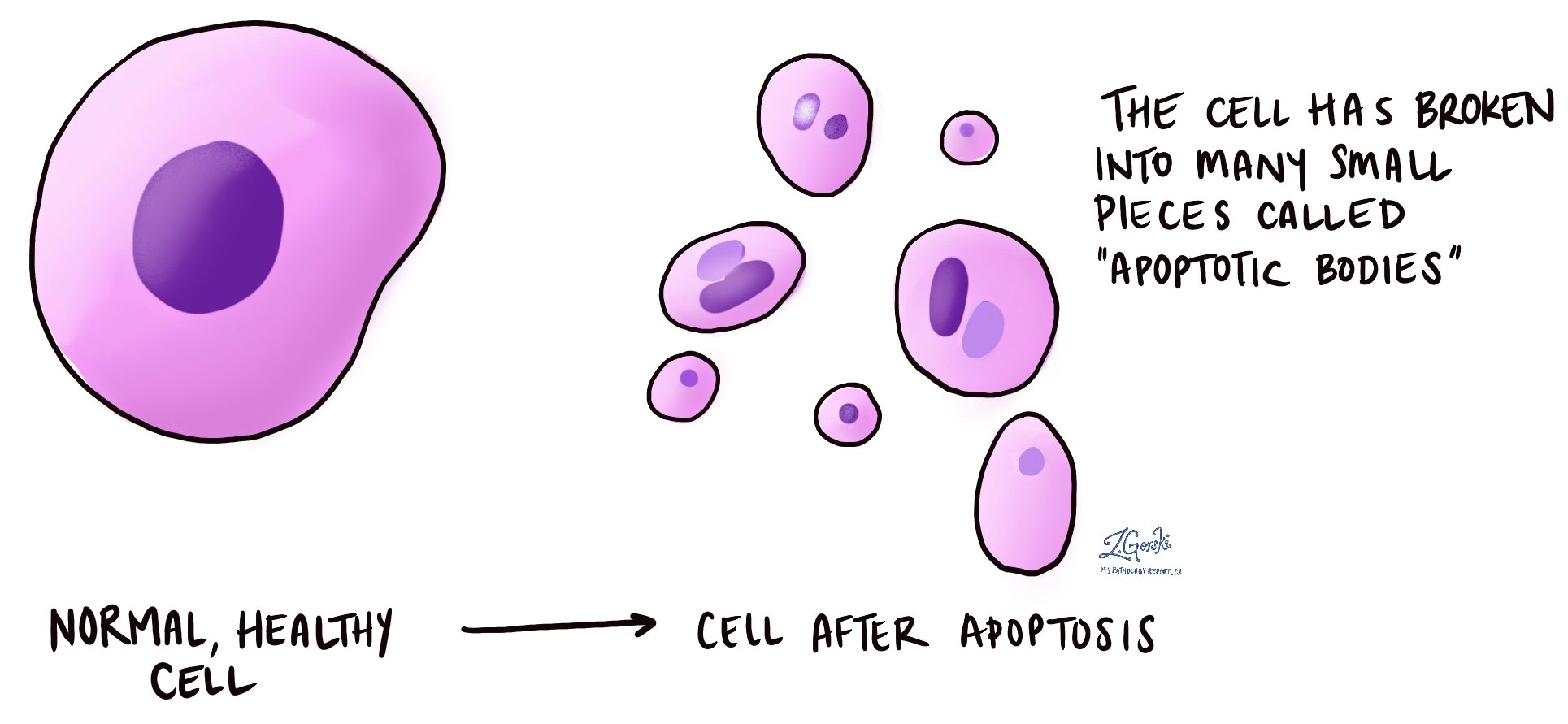
Apoptosis is a natural, highly organized form of cell death, often called “programmed cell death.” It is the body’s way of removing cells that are no longer needed, worn out, or damaged, and it occurs in an orderly, controlled manner that does not harm surrounding tissue. Apoptosis is a normal and essential process, not a disease. It is different from necrosis, a messier, uncontrolled type of cell death that results from injury and triggers inflammation. This article explains what apoptosis is, why it happens, and why it may come up in relation to your pathology report.
Why does apoptosis happen?
The body uses apoptosis throughout life to keep tissues healthy and balanced. Common reasons apoptosis occurs include:
- Development before birth — Apoptosis helps shape the body as it forms. For example, it removes the tissue between developing fingers and toes, allowing separate digits to form.
- Keeping tissues balanced — In adults, apoptosis balances the steady production of new cells by removing old or unneeded ones, which helps keep organs the right size and working properly.
- Immune system regulation — Apoptosis removes immune cells that are no longer needed or that could mistakenly attack the body, helping prevent an overactive immune response.
- Removing damaged or infected cells — Cells that are severely damaged, stressed, or infected with viruses can undergo apoptosis to prevent the problem from spreading to neighboring cells.
- Hormonal signals — Hormones can trigger apoptosis in certain tissues. For example, the lining of the uterus sheds through controlled cell death during the menstrual cycle.
What does apoptosis look like under the microscope?
When a pathologist sees apoptosis under the microscope, the dying cell shrinks, and its nucleus becomes small and dark as the chromatin (the material that packages the cell’s DNA) condenses and breaks apart. The cell then splits into small fragments called apoptotic bodies. These fragments are quickly cleaned up by histiocytes (a type of immune cell that removes debris), so apoptosis usually does not cause inflammation in the surrounding tissue. A pathologist may describe individual dying cells as “apoptotic bodies” or note increased apoptosis in a sample.
How is apoptosis different from necrosis?
Apoptosis and necrosis are both forms of cell death, but they are very different. Apoptosis is controlled and tidy: the cell shrinks, breaks into small pieces, and is cleared away without disturbing nearby tissue. Necrosis is uncontrolled and usually results from injury, infection, or a loss of blood supply. In necrosis, cells swell and burst, spilling their contents and triggering inflammation. Apoptosis is a normal process in healthy tissue, whereas necrosis reflects damage. Areas of necrosis can sometimes be seen in malignant (cancerous) tumors that grow faster than their blood supply can support.
Why is apoptosis important in cancer?
Apoptosis is one of the body’s main defenses against cancer. Normally, cells with irreparable genetic damage are eliminated by apoptosis before they can become cancerous. Many cancers develop in part because cells have lost the ability to undergo apoptosis, allowing damaged cells to survive and continue dividing. This also matters for treatment: several cancer therapies, including chemotherapy and radiation, induce apoptosis in cancer cells. How well a cancer responds to these signals is part of how the care team evaluates and manages the disease.
Questions to ask your doctor
- What does “apoptosis” or “apoptotic bodies” mean in my pathology report?
- Is the apoptosis described in my report a normal finding or a sign of a problem?
- If increased apoptosis was noted, what does that mean in my case?
- How does this finding relate to my diagnosis?
- If I have cancer, does it respond to treatments that work by triggering apoptosis?
- Are there other findings in my report that are more important for my care?
Related articles on MyPathologyReport.com
- Necrosis (uncontrolled cell death, the opposite of apoptosis)
- Mitosis (how cells divide; apoptosis helps balance cell division)
- Histiocytes (immune cells that clear away apoptotic cells)
- Chromatin (the DNA packaging that condenses during apoptosis)
We are proud to partner with:


🔍 Search MyPathologyReport
Type what you see on your report — for example a diagnosis or test name