

Epidermotropism is a term pathologists use to describe cells that are moving toward or located within the epidermis, which is the thin outer layer of the skin. In a pathology report, epidermotropism usually refers to abnormal cells—such as cancer cells or immune cells—that are found in the epidermis when they are not normally present there. The presence of these cells often suggests that they are migrating from deeper layers of the skin or from the immune system into the epidermis.
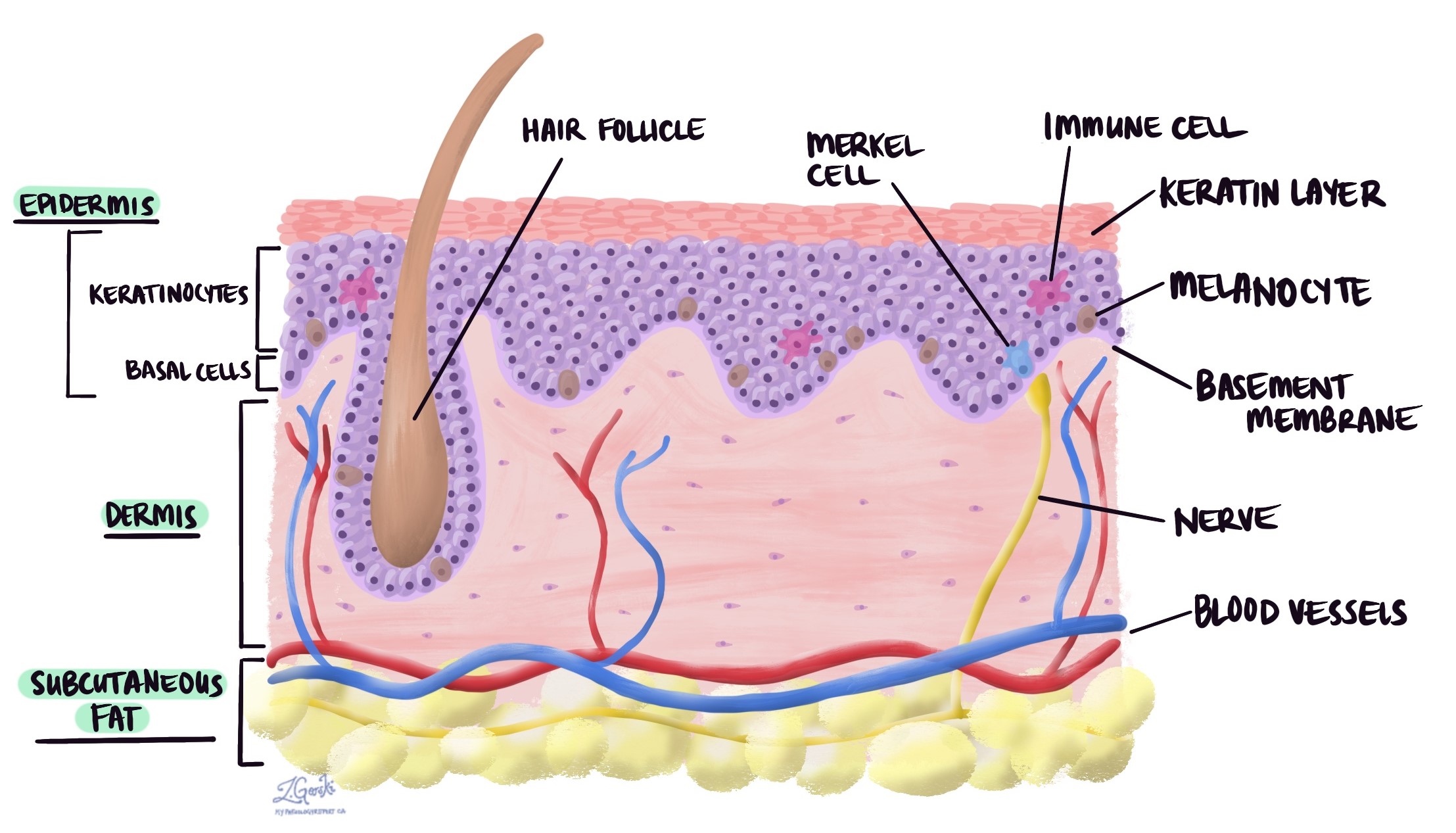
Where is the epidermis and what is its role?
The epidermis is the body’s outermost barrier, protecting against infection, injury, and water loss. It is normally made up of keratinocytes, along with melanocytes (pigment-producing cells) and a small number of immune cells. In healthy skin, the epidermis does not contain large clusters of abnormal immune cells or cancer cells. When such cells are seen in the epidermis, this is described as epidermotropic.
What causes epidermotropism?
Several conditions can cause cells to move into the epidermis, including:
-
Cutaneous T-cell lymphoma (CTCL): In diseases such as mycosis fungoides, malignant T lymphocytes migrate into the epidermis, creating an epidermotropic pattern under the microscope.
-
Other skin lymphomas: Some types of skin-based lymphomas or leukemias may also show epidermotropism.
-
Inflammatory skin diseases: Certain rashes and inflammatory conditions can bring immune cells into the epidermis as part of the body’s defense response.
-
Melanoma: Some melanomas, especially superficial spreading types, may have cancer cells within the epidermis.
What does epidermotropism look like under the microscope?
When a pathologist examines a skin biopsy, they may note that abnormal cells are within the epidermis. These cells can appear as single scattered cells between keratinocytes or as small groups. In cutaneous T-cell lymphoma, for example, the abnormal lymphocytes often cluster in small groups called Pautrier microabscesses within the epidermis. The pattern, type of cell, and presence of other features help the pathologist determine the underlying cause.
Why is epidermotropism important?
Epidermotropism is an important microscopic finding because it can be a clue to specific skin diseases, especially cutaneous T-cell lymphoma. Identifying this pattern helps narrow down the possible diagnoses and can guide further testing. For example, immunohistochemistry or molecular tests may be performed to confirm the type of cell and determine whether it is benign or malignant.
Questions to ask your doctor
-
What type of cells are showing epidermotropism in my biopsy?
-
Does this finding suggest a cancer, an inflammatory condition, or another type of disease?
-
Will more tests be needed to confirm the diagnosis?
-
How does this finding affect my treatment plan and prognosis?
We are proud to partner with:


🔍 Search MyPathologyReport
Type what you see on your report — for example a diagnosis or test name