

The lamina propria is a thin layer of soft tissue that sits just beneath the surface layer of many organs, including the digestive tract, respiratory tract, and urinary tract. This layer plays a crucial role in supporting the surface lining and maintaining the body’s health.
What does the lamina propria do?
The lamina propria has several vital functions:
-
Support and strength – It acts like a cushion, providing both strength and flexibility to the tissue, allowing it to withstand stretching and movement.
-
Immune defense – It contains immune cells that protect the body from germs such as bacteria, viruses, and fungi. If germs pass through the surface lining, these immune cells are ready to attack and destroy them.
-
Nourishment and repair – The lamina propria contains many tiny blood vessels that bring oxygen and nutrients to the tissue and remove waste. These blood vessels also help the surface lining heal after injury.
What does the lamina propria look like under the microscope?
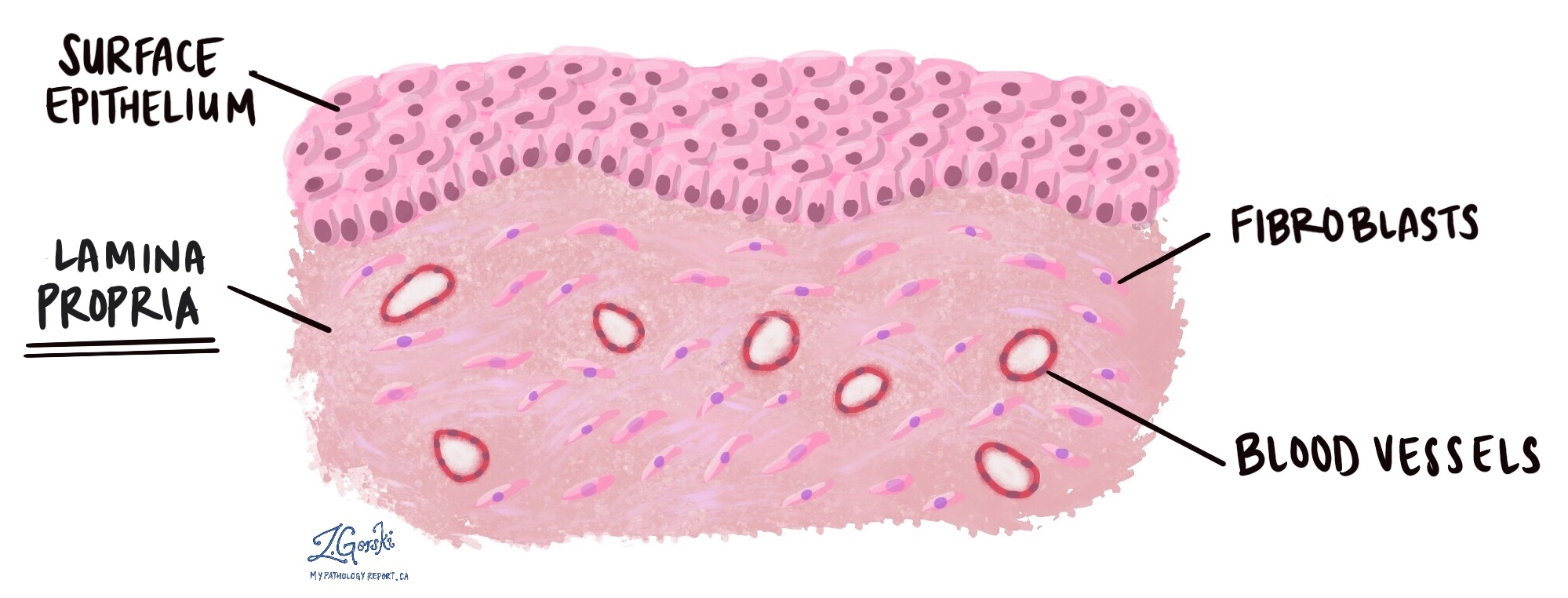
The lamina propria can only be seen clearly under the microscope. It is made up of the following parts.
-
Fibroblasts – Supporting cells that produce matrix proteins, which hold the tissue together.
-
Blood vessels – Small vessels that supply oxygen and nutrients and remove waste.
-
Immune cells – A variety of cells that protect against infections.
-
Epithelium above – In most areas, the lamina propria sits directly under a barrier of epithelial cells, which form the surface lining of the organ.
Together, these structures contribute to the lamina propria’s strength, flexibility, and protective role.
Why do pathologists examine the lamina propria?
Pathologists look closely at the lamina propria because it often shows important changes in health and disease. Some key reasons include:
-
Detecting inflammation – The immune cells in the lamina propria increase in number or change appearance when there is inflammation caused by infections or autoimmune conditions.
-
Identifying infections – Germs such as bacteria, viruses, or fungi may invade the lamina propria. Pathologists may see the germs directly or find evidence of the immune system fighting them.
-
Diagnosing cancer – Many cancers begin in the epithelium, the surface lining above the lamina propria. If cancer cells spread down into the lamina propria, it confirms invasion and helps determine the tumor stage. This information is critical for treatment planning and predicting how the cancer may behave.
-
Evaluating chronic changes – Long-term injury or disease can cause fibrosis (scarring) in the lamina propria. This is often seen in conditions such as inflammatory bowel disease.
-
Assessing blood vessels – The small blood vessels in the lamina propria can show signs of disease, such as vasculitis (inflammation of the vessels) or injury related to infections or other conditions.
Questions to ask your doctor
-
Was the lamina propria normal or did it show signs of inflammation or damage?
-
Were there any signs of infection in the lamina propria?
-
Were cancer cells found in the lamina propria? If so, how does that affect the stage of my tumor?
-
Did the lamina propria show scarring or fibrosis, and what does that mean for my condition?
-
Were the blood vessels in the lamina propria normal or affected by disease?
We are proud to partner with:

