

The transformation zone is a normal area of the cervix. It is the place where the two types of cells that line the cervix meet. Most precancerous changes and cancers of the cervix start in this area. For this reason, cervical screening tests aim to collect cells from it.
This article explains what the transformation zone is, how it changes over time, why it matters, and what your report may say about it.
What is the transformation zone?
The transformation zone is the area of the cervix between its outer surface and its inner canal. The cervix is the lower, narrow part of the uterus that opens into the vagina. Two types of cells line it:
- Squamous cells. Thin, flat squamous cells cover the outer surface (the ectocervix).
- Glandular cells. Tall glandular cells line the canal (the endocervix). These cells make mucus.
In the transformation zone, squamous cells gradually replace glandular cells. Pathologists call this process squamous metaplasia. It is a normal change, not a disease.
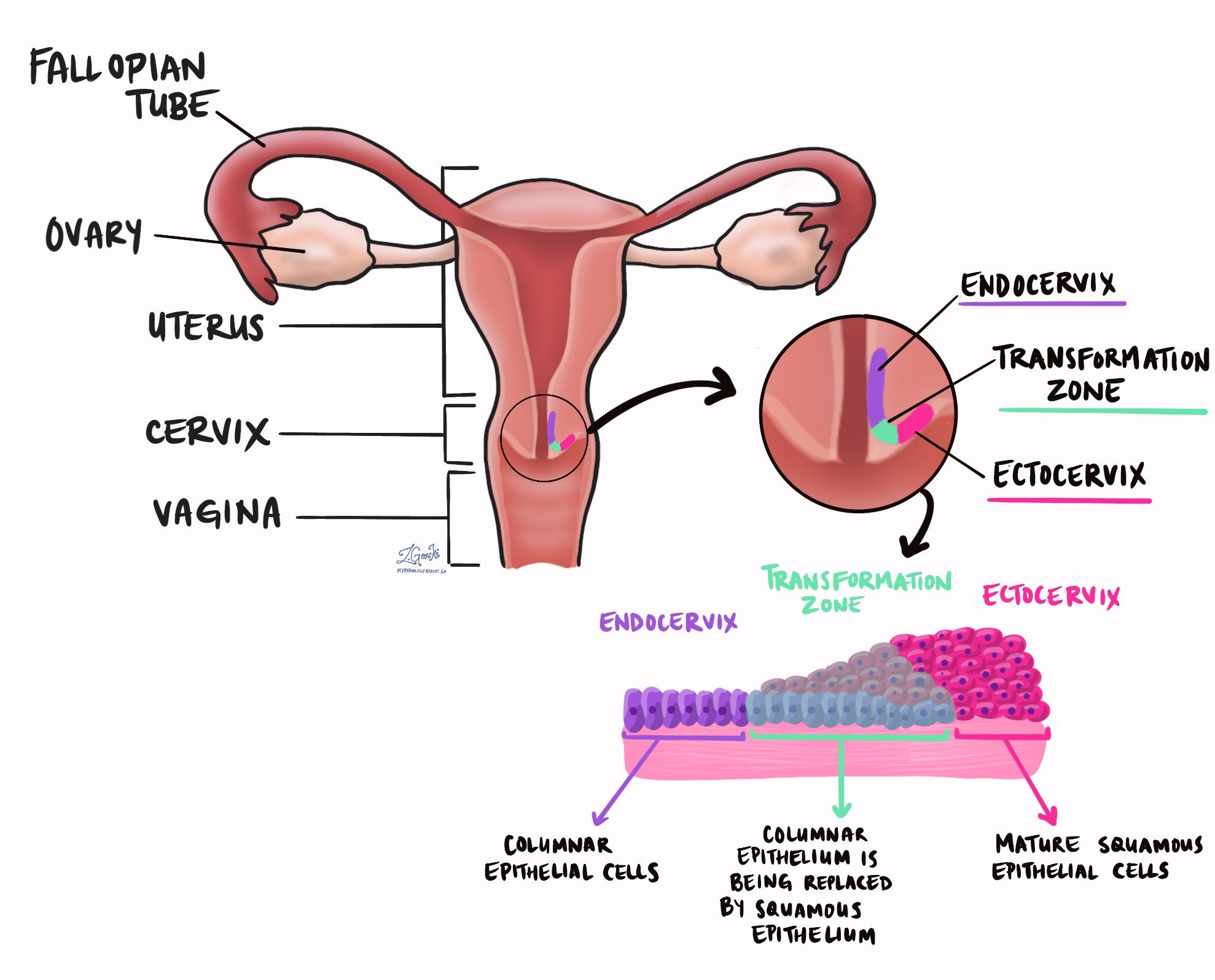
How does the transformation zone change over time?
The transformation zone moves during life. Doctors call the border where squamous and glandular cells meet the squamocolumnar junction. Hormones move this border:
- Puberty. The border moves out onto the outer surface of the cervix. Glandular cells then cover part of the outer cervix.
- Reproductive years. Squamous cells slowly replace these glandular cells. The border moves back toward the canal opening.
- Menopause. The border often moves inside the canal.
The transformation zone is the area between the first border and the current one. Its size and position differ from person to person.
Why is the transformation zone important?
The transformation zone is where most cervical precancer and cancer starts. These changes almost always follow infection with high-risk human papillomavirus (HPV). The cells in this zone are changing, which may make them easier for HPV to infect. HPV infection most often persists in this area. The changes that start here include:
- LSIL. Low-grade squamous intraepithelial lesion is a mild precancerous change. Pathologists also call it CIN1.
- HSIL. High-grade squamous intraepithelial lesion is a more serious precancerous change. It includes CIN2 and CIN3. See cervical intraepithelial neoplasia.
- Squamous cell carcinoma. HPV-associated squamous cell carcinoma is the most common type of cervical cancer.
Why does the transformation zone matter in a Pap test?
A Pap test collects cells from the transformation zone. Abnormal changes most often start there. Pathologists check the sample for squamous metaplastic cells or glandular cells from the canal. These cells show that the test reached the transformation zone.
A report may say that the transformation zone component is absent. This result does not make the test unsatisfactory. Long-term studies have not linked a missing transformation zone to more disease. The zone can be harder to reach after menopause, when it often sits inside the canal. Your doctor decides whether to repeat the test.
How do doctors examine the transformation zone?
An abnormal Pap test or a positive HPV test usually leads to a colposcopy. During a colposcopy, the doctor looks at the cervix with a magnifying instrument. The doctor can see the transformation zone and take a biopsy from any abnormal area. The pathologist then examines the tissue under the microscope.
For some precancerous changes, the doctor removes tissue from the cervix with a loop electrosurgical excision procedure (LEEP). The pathologist examines this tissue too.
What might my report say about the transformation zone?
Your report may mention the transformation zone in a few standard ways. Each laboratory phrases it a little differently:
- Transformation zone component present. The Pap sample includes cells from the transformation zone.
- Transformation zone component absent. The Pap sample did not include these cells. The sample can still be satisfactory.
- Squamous metaplasia. The biopsy shows the normal change from glandular to squamous cells. It is not a precancerous change.
- Transformation zone with LSIL or HSIL. The biopsy shows a precancerous change in the transformation zone.
Questions to ask your doctor
- Did my Pap test include cells from the transformation zone?
- If the transformation zone was absent, do I need to repeat the test?
- Did my sample show any changes related to HPV?
- Did I have an HPV test, and what was the result?
- Do I need a colposcopy?
- If I had a biopsy, did it show squamous metaplasia, LSIL, or HSIL?
- How often should I have cervical screening based on my results?
Related articles on MyPathologyReport.com
We are proud to partner with:


🔍 Search MyPathologyReport
Type what you see on your report — for example a diagnosis or test name